Borreria repens
Borreria repens
Description
Borreria repens is a notable herbaceous plant belonging to the Rubiaceae family. While often categorized as a wild species, its morphological traits and chemical composition have sparked interest in agronomy and ethnobotany. This plant is well-adapted to tropical climates and plays a significant role in its native ecosystem as a ground-covering species.
Originating from the tropical regions of the Americas, this plant has spread across various humid environments globally. It thrives in open landscapes, fields, and forest edges. Its ability to colonize disturbed soil makes it a resilient species, capable of surviving in diverse environmental conditions provided there is sufficient moisture and warmth.
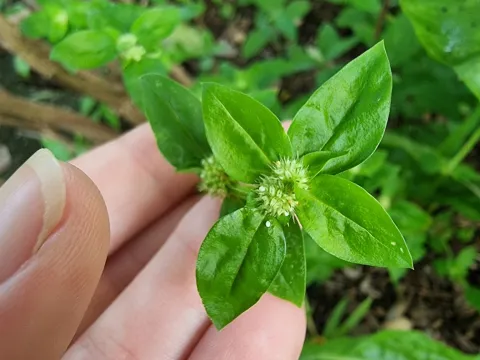
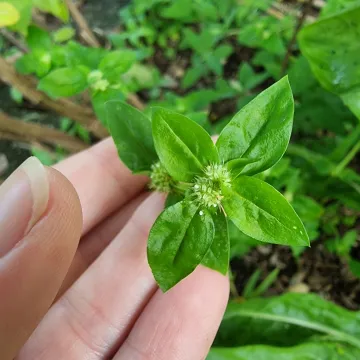
The botanical profile of Borreria repens features creeping stems that readily root at the nodes when in contact with moist substrate. Its leaves are opposite, simple, and typically glabrous or slightly pubescent. The plant produces dense, head-like inflorescences of small, white flowers, which are characteristic of the Rubiaceae family. These features allow the plant to maintain high reproductive efficiency.
Regarding cultivation, this species requires tropical conditions to reach its full development potential. It prefers fertile, well-draining soils with a neutral pH. Consistent irrigation is vital, as the plant does not tolerate prolonged drought. In an agricultural setting, regular weeding is necessary in the early stages, as the plant can be sensitive to competition from more aggressive weeds until it establishes its own dense ground cover.
The host of potential uses for Borreria repens is diverse. Beyond its ecological function in preventing soil erosion, the plant is studied for its potential medicinal properties, including anti-inflammatory and antimicrobial effects. While it is not a major commercial crop, it remains a plant of interest for niche cultivation in sustainable agricultural systems. Diseases affecting the crop are primarily fungal, often appearing during seasons of excessive rainfall.
- Family: Rubiaceae
- Plant Habit: Creeping herbaceous perennial
- Temperature Range: 20°C–30°C
- Primary Utilization: Soil erosion control, medicinal research
Photo gallery