Gumbo limbo
Bursera simaruba (L.) Sarg.
Description
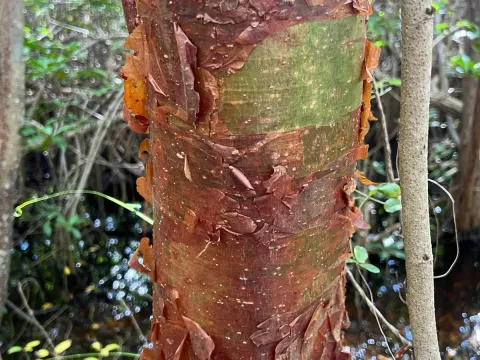
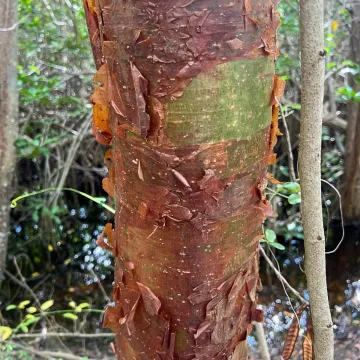
The Gumbo limbo (Bursera simaruba) is a prominent tree species belonging to the Burseraceae family. Often referred to as the "tourist tree," it earned this nickname due to its distinct, peeling reddish bark that resembles sunburned skin. This fast-growing deciduous tree is highly valued in tropical landscapes for its structural resilience and unique appearance.
Native to the tropical regions of the Americas, its natural range extends from southern Florida, Mexico, and the Caribbean islands down to northern South America. The species thrives in a variety of environments, including limestone outcrops, coastal hammocks, and dry tropical forests. Due to its natural habitat, it is exceptionally adapted to salt spray and high-wind environments, making it a staple in coastal landscaping.
Botanically, the Gumbo limbo can reach heights of up to 30 meters. It features compound, pinnate, dark green leaves that provide an excellent canopy. The tree produces small, inconspicuous white or greenish flowers in early spring, which eventually develop into small, drupe-like fruits. The wood is light, soft, and brittle, which renders it unsuitable for high-load construction but perfect for specialized woodworking.
From an agricultural standpoint, the Gumbo limbo is remarkably easy to cultivate. It requires full sun exposure and thrives in well-draining soil types, ranging from sandy to rocky. It is highly drought-tolerant, requiring irrigation only during the establishment phase. One of the most unique aspects of its agronomy is its vegetative propagation; large cuttings, often referred to as "living posts," can be directly planted to establish fences or windbreaks.
The commercial and practical utility of Bursera simaruba is diverse:
- Extraction of aromatic resin known as "West Indian turpentine" or "chibou."
- Traditional medicinal applications of the bark for treating skin conditions and inflammation.
- Use in reforestation programs to stabilize soil in degraded areas.
- Production of high-quality charcoal and small wooden craft items.
Photo gallery