Canadian tick trefoil
Desmodium canadense (L.) DC.
Description
Canadian tick trefoil (Desmodium canadense) is a robust perennial herbaceous plant belonging to the Fabaceae family. As a leguminous crop, it plays a vital role in soil health by fixing atmospheric nitrogen, making it an excellent candidate for sustainable farming practices and land reclamation projects.
Native to North America, the species naturally thrives in diverse habitats including prairies, thickets, and riverbanks. Its geographical range has expanded due to its adaptability to various temperate climates, allowing it to grow successfully in a wide variety of soil types, ranging from moist alluvial soils to drier, sandy environments.
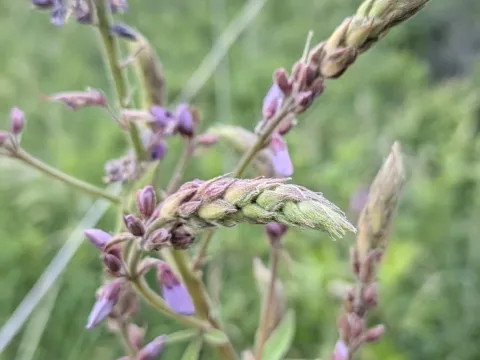
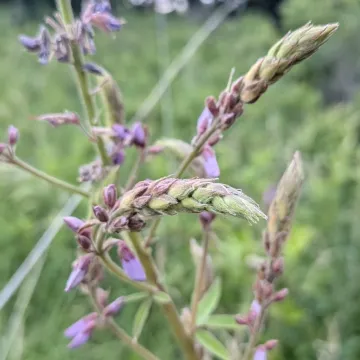
Botanically, the plant develops an upright, leafy stem structure that can reach heights of up to 1.5 meters. It is characterized by pinnately compound trifoliate leaves and produces showy, pink to purple flowers during the mid-to-late summer months. The seeds are enclosed in unique segmented pods covered with tiny hooked hairs, which allow them to attach to passing animals for dispersal.
Agrotechnical requirements focus on site selection with full sun exposure and well-draining soil. While the crop is drought-tolerant once established, growers should monitor weed pressure during the initial germination phase. The plant is winter-hardy and capable of persisting through severe winters, providing a consistent return for several years without the need for annual reseeding.
Its primary agricultural and economic applications include:
- Forage production, providing high-quality protein feed for livestock.
- Honey production, as it serves as a reliable late-season nectar source for pollinators.
- Soil conservation, effectively preventing erosion on sloped terrains.
- Biodiversity enhancement, supporting local insect populations and beneficial wildlife.
Regarding health management, Canadian tick trefoil is relatively hardy. Potential threats include foliar diseases caused by excessive humidity and certain insect herbivores. However, these issues are generally manageable through proper field spacing and rotation, rarely requiring the intensive use of synthetic pesticides, thus maintaining the crop's ecological value.
Photo gallery