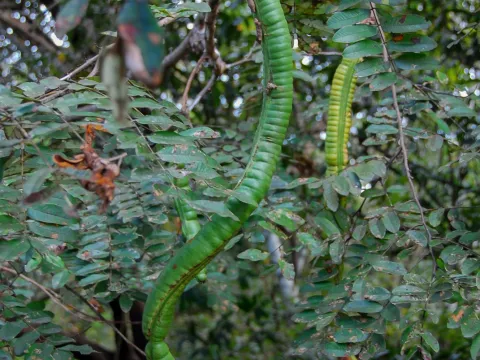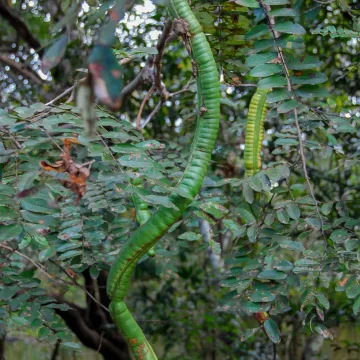
Cassia leiandra
Cassia leiandra Benth.
Description
Cassia leiandra Benth. is an impressive woody plant belonging to the Fabaceae family, often noted for its striking floral displays. As a member of the legume family, it possesses unique physiological traits that make it a significant subject for both ornamental horticulture and ecological studies in tropical regions.
Originating from South America, specifically Brazil, this species is well-adapted to tropical climates. Its natural range encompasses forests and savannah regions where it thrives under consistent thermal conditions. In commercial and ornamental settings, it is valued for its rapid growth rate and ability to adapt to diverse tropical environments.
Botanically, Cassia leiandra features complex pinnate leaves and clusters of showy flowers that serve as an essential resource for pollinators. The wood of the tree is characterized by considerable density, and its root system is known for nitrogen-fixing capabilities, which helps in improving soil fertility in the surrounding areas.
Agronomic requirements for this species include high solar radiation, well-draining soil, and consistent temperatures. It does not tolerate frost and requires protection from extreme weather conditions. Irrigation should be managed carefully to avoid waterlogging, as the root system is sensitive to anoxia, especially in heavy clay soils.
- Ornamental landscaping and urban greening.
- Soil nitrogen enrichment in agroforestry systems.
- Support for pollinator populations in tropical areas.
- Production of high-quality biomass.
Typical plant health issues involve fungal leaf spots and infestations by sap-sucking insects during periods of high humidity. Effective pest and disease management strategy should focus on maintaining proper crown aeration, ensuring adequate spacing between trees, and utilizing integrated pest management practices to maintain healthy growth cycles.
Photo gallery