Umbrella Cecropia
Cecropia sciadophylla
Description
Umbrella Cecropia (Cecropia sciadophylla) is a fast-growing woody plant belonging to the Urticaceae family. In its natural habitat, this species acts as a pioneer plant, being one of the first to colonize degraded areas of tropical forests and playing a vital role in ecological succession and forest regeneration.
The plant originates from the humid tropical regions of South America, specifically within the Amazon and Orinoco river basins. It is commonly found in the rainforests of Brazil, Peru, Colombia, and Venezuela, thriving in sun-exposed areas with high atmospheric humidity where sunlight can reach the forest floor directly.
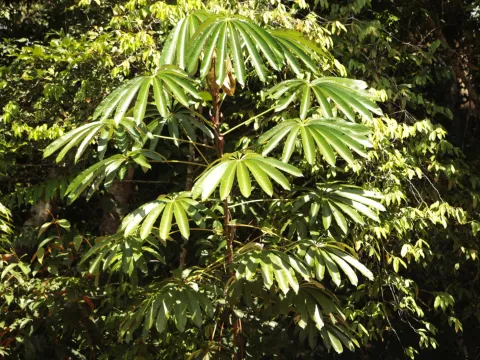
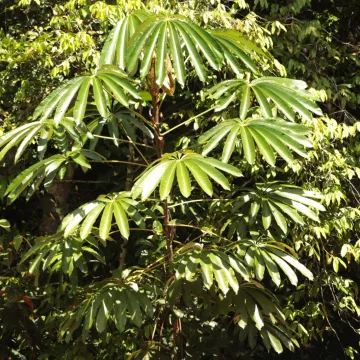
Botanically, the species is distinguished by its characteristic umbrella-like arrangement of large palmate leaves at the ends of hollow, branching stems. The tree can reach considerable heights and possesses a unique evolutionary adaptation: a symbiotic relationship with ants that inhabit the hollow nodes of the stem and protect the plant from herbivores.
Successful cultivation of Cecropia requires a hot, humid climate without prolonged dry seasons. The plant is sensitive to soil conditions, preferring deep, fertile, and well-drained substrates. Agronomic management involves providing adequate space for root expansion and ensuring optimal light conditions, as the species is highly intolerant of deep shade.
The economic utility of the crop lies in its timber, which is utilized in the paper and furniture industries, as well as in traditional medicine. Due to its rapid biomass production, it is increasingly used in agroforestry projects for soil stabilization and rapid reforestation in degraded tropical landscapes.
- Rapid vegetative growth
- Resistance to various tropical pests
- Myrmecophilic symbiotic associations
- Utilization in tropical landscape restoration
Photo gallery