
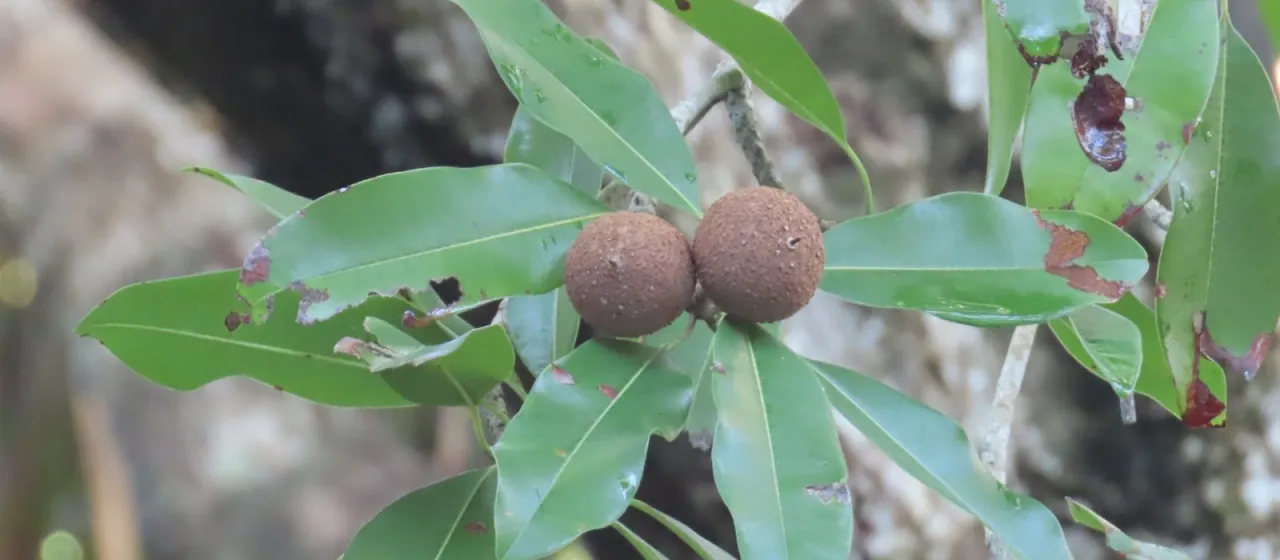
Description
The Sapodilla (Manilkara zapota), also known as chikoo or naseberry, is a long-lived, evergreen tree belonging to the Sapotaceae family. This tree is economically significant due to both its delicious, caramel-flavored fruit and its milky latex known as chicle, which was the original base for chewing gum before the advent of synthetic polymers.
Originating from the tropical regions of Mexico, Central America, and the Caribbean, the sapodilla has since spread throughout the tropical world. It is now widely cultivated in countries like India, Thailand, and Malaysia, where it thrives in warm, humid climates. The tree is exceptionally hardy, capable of withstanding various tropical conditions, although it requires specific management to reach peak yield potential.
Botanically, the sapodilla tree features a dense, symmetrical crown with glossy, leathery leaves and small, white, bell-shaped flowers. It is a slow-growing species that can reach significant heights, though growers typically prune it to maintain a manageable size. The fruit is a berry with a russet-brown, thin skin and a sweet, grainy pulp that contains several hard, black, glossy seeds.
For successful cultivation, the tree requires well-drained, fertile soil and full sun exposure. It is highly sensitive to waterlogged conditions, making proper soil drainage a critical component of agricultural management. While the tree is quite drought-tolerant once established, supplemental irrigation during fruit development significantly enhances both the quality and size of the harvest.
From an agricultural standpoint, sapodilla requires a long-term investment due to its slow growth rate. Management practices focus on:
- Regular pruning to facilitate light penetration and harvesting.
- Nutrient management via organic compost and mineral fertilizers.
- Pest control, specifically targeting scales, fruit flies, and mealybugs.