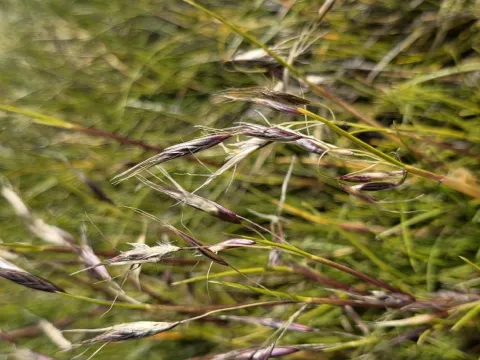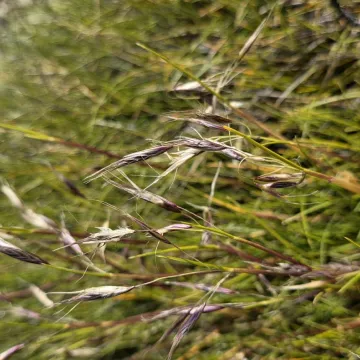
Southern snow tussock
Chionochloa australis
Description
Southern snow tussock (Chionochloa australis) is a perennial grass species belonging to the Poaceae family. As a native species of New Zealand, it is a dominant feature of the alpine and subalpine landscapes. In an agricultural and land management context, this grass is highly valued for its ability to stabilize fragile soils in high-altitude environments.
The plant originates from the mountainous regions of the South Island, where it thrives in extreme alpine conditions. It is specifically adapted to environments characterized by low temperatures, significant wind exposure, and high annual precipitation. Its natural habitat includes steep slopes and plateau regions where it functions as a critical soil anchor.
Botanically, Chionochloa australis is recognized by its dense, tussock-forming growth habit. The leaves are typically stiff, needle-like, and grow in large, bunched clumps that provide protection to the crown. The root system is extensive and fibrous, allowing the plant to penetrate rocky ground and stabilize loose scree slopes, effectively preventing soil erosion.
Cultivation requirements for this species demand careful consideration of its alpine ecology. It thrives best in well-drained, acidic, and nutrient-poor soils. It does not require conventional fertilization or intensive field management. Instead, the primary management focus is the protection of its slow-growing tussocks from overgrazing and mechanical disturbance, as the plant has a slow recovery rate from physical damage.
In terms of agricultural use, while the southern snow tussock is not considered a high-value forage crop due to the high silica content in its leaves which makes it tough for livestock, it holds immense value in ecological restoration projects. It is an ideal candidate for reclaiming degraded landscapes and protecting catchment areas. The species exhibits strong natural resistance to most common pests and diseases, which is a major advantage for low-maintenance restoration programs.
Photo gallery