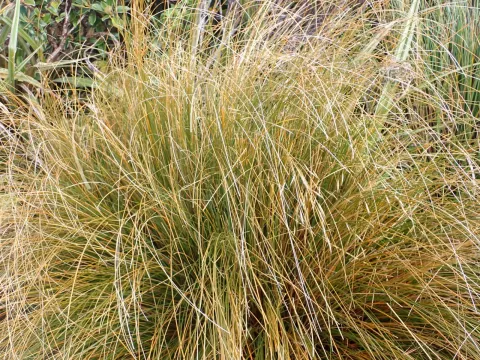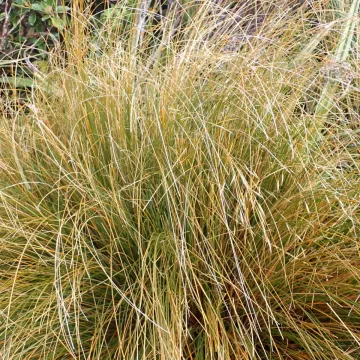
Red tussock grass
Chionochloa rubra
Description
Red tussock grass (Chionochloa rubra) is a perennial herbaceous plant belonging to the Poaceae (grass) family. In its natural habitat, this plant grows as a dense tussock with narrow, arching leaves of a distinct copper-red or reddish-brown color, providing a unique texture and color contrast throughout the seasons.
Native to New Zealand, this grass typically inhabits subalpine grasslands and open, rocky terrains. Because of its evolution in harsh, windy, and nutrient-poor environments, the species has become a valued plant for ornamental gardens and landscaping projects in temperate climates globally.
Botanically, the plant is characterized by a strong root system and stiff, drooping leaf blades that can reach up to 1 meter in height. During the flowering stage, which usually occurs in the summer, the plant produces graceful, feathery panicles that mature into a light straw color, contrasting beautifully with the deep-toned foliage.
Successful cultivation requires well-drained, sandy, or loamy soils with a slightly acidic to neutral pH. It thrives in full sun but can tolerate partial shade. A critical aspect of its care is maintaining moderate soil moisture; while the plant is hardy, it does not tolerate waterlogging, which can lead to root rot in poorly drained conditions.
The primary use of Chionochloa rubra is in professional landscape design and garden architecture. Its resilience and unique visual impact make it an ideal choice for several applications:
- integrated into gravel gardens and rockeries;
- used as a focal point in ornamental grass beds;
- planted in decorative containers for patios;
- incorporated into mixed borders for seasonal texture.
This species is notably resistant to most common garden pests and diseases, making it a low-maintenance option for sustainable landscaping. Potential issues are usually restricted to fungal infections caused by excessive soil dampness or poor airflow, highlighting the importance of site selection and proper spacing during planting.
Photo gallery