Opposite-leaved golden-saxifrage
Chrysosplenium oppositifolium
Description
Opposite-leaved golden-saxifrage (Chrysosplenium oppositifolium) is a perennial herbaceous plant belonging to the Saxifragaceae family. In horticulture, it is prized as an effective groundcover species, capable of forming dense, low-growing mats in damp, shaded environments where other plants might struggle.
The plant is native to temperate regions of Europe and Asia. It naturally colonizes habitats characterized by high humidity and consistent moisture, such as the banks of streams, moist woodland slopes, and shaded rocky areas, where it thrives in cool and sheltered microclimates.
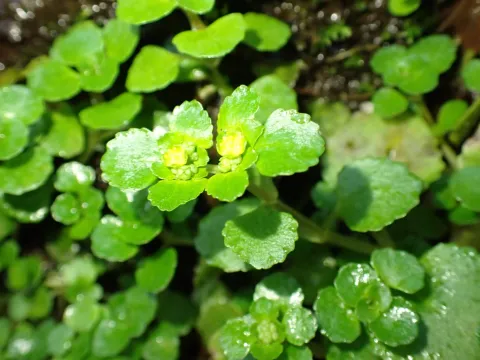
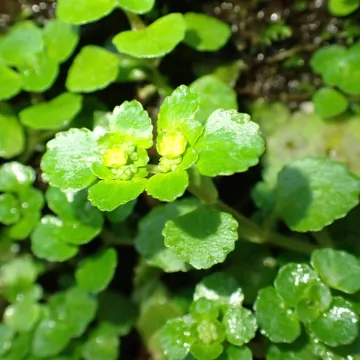
Botanically, it is distinguished by its creeping, rooting stems and oppositely arranged leaves. The inflorescences consist of tiny yellow-green flowers, subtended by yellowish leafy bracts, which provide a subtle yet charming visual interest during the early spring growing season.
Cultivation requirements for this species are specific: it demands high humidity and constant soil moisture. It is best suited for shade gardens, bog gardens, or the edges of water features. A rich, humic, and friable soil structure is necessary for optimal growth, ensuring that the roots remain cool and hydrated.
- Environment: Partial to full shade.
- Soil type: Moist, well-draining yet water-retentive humus.
- Propagation: By division or stem cuttings in spring or autumn.
In terms of plant health, the opposite-leaved golden-saxifrage is quite resilient. While it is generally free from major pests, it is sensitive to severe drought, which can lead to quick wilting and death. Gardeners should ensure adequate airflow and prevent soil compaction to avoid potential root rot in stagnant water conditions.
Photo gallery