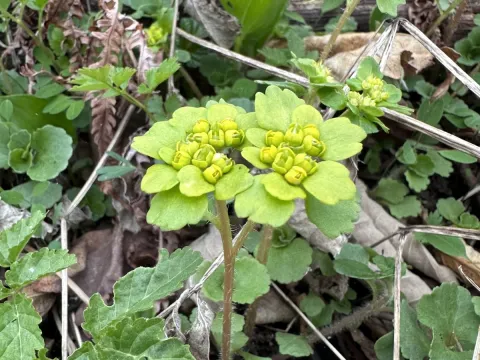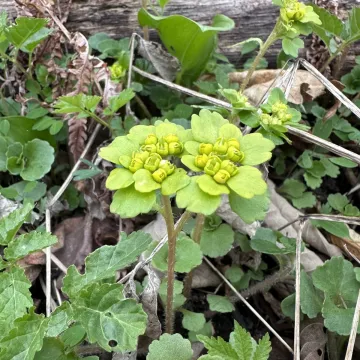
Golden saxifrage
Chrysosplenium pilosum
Description
Golden saxifrage (Chrysosplenium pilosum) is a herbaceous perennial plant belonging to the Saxifragaceae family. In agronomy and horticulture, this species is categorized as a low-growing, shade-tolerant groundcover that is highly effective for covering moist, shaded areas where lawn grasses would struggle to survive.
The plant originates from East Asia, specifically regions within Russia, China, Japan, and Korea. In its natural habitat, it thrives in damp forest understories and along mountain streams. Due to its adaptability to low-light conditions, it has gained popularity in temperate climate zones as an ornamental plant for rock gardens and woodland borders.
Botanically, Chrysosplenium pilosum is defined by its small, rounded, pubescent leaves arranged in basal rosettes. Its stems are soft and often sprawling. The plant produces small, yellow-green flowers during early spring. These flowers are subtended by bracts that match the flower color, creating an illusion of larger blossoms and providing early-season interest in the landscape.
Cultivation requires specific environmental conditions, primarily high soil moisture and deep shade. The soil must be rich in organic matter, slightly acidic to neutral, and possess excellent drainage to prevent stagnation. Agronomic maintenance focuses on moisture management; if the substrate dries out, the plant quickly loses vigor. It is well-suited for northern garden aspects that remain cool throughout the summer.
The plant is generally resistant to major pests and diseases if managed in its preferred microclimate. Potential issues usually arise from fungal infections like root rot, which occurs only if the soil remains waterlogged without adequate air circulation. No major agricultural chemical interventions are required for this plant, making it an excellent candidate for low-maintenance, ecologically sustainable gardening practices.
Photo gallery