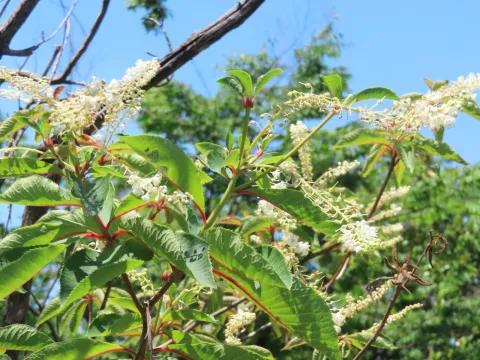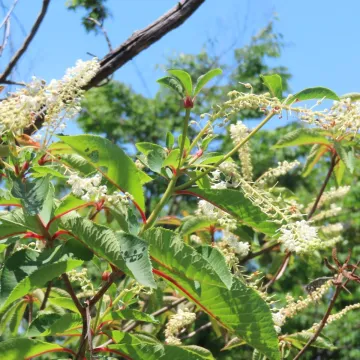
Japanese clethra
Clethra barbinervis Siebold & Zucc.
Description
Japanese clethra (Clethra barbinervis) is a deciduous shrub or small tree belonging to the Clethraceae family. Renowned for its unique exfoliating bark and late-summer fragrant flowers, it serves as an excellent ornamental specimen in gardens, offering year-round visual interest.
Native to Eastern Asia, including Japan and Korea, this species naturally thrives in moist, woodland environments. Its adaptation to these conditions makes it a favorable choice for temperate gardens that offer acidic soils and sufficient humidity, mimicking the natural forest floor habitats from which it originates.
Botanically, it is characterized by long, drooping racemes of white flowers that bloom from July through September. The foliage is lush and green throughout the growing season, transforming into spectacular shades of yellow, orange, and crimson in the autumn months, which enhances the aesthetic appeal of any outdoor space.
Cultural requirements for success include planting in well-drained, acidic soil rich in organic matter. While it tolerates partial shade, it performs best when protected from harsh midday sun and strong, drying winds. Soil moisture management is critical, as the plant does not tolerate prolonged drought or waterlogging.
- Maintain soil acidity between pH 4.5 and 6.0.
- Use pine needles or peat as mulch to retain soil moisture.
- Avoid cultivation near the shallow root zone to prevent damage.
- Apply slow-release acidic-loving plant fertilizers annually.
The species is generally free from major pests and diseases when grown in suitable conditions. However, growers should monitor for potential issues like chlorosis caused by high soil pH levels. Proper site selection and maintaining optimal moisture levels effectively mitigate most maintenance challenges associated with this plant.
Photo gallery