Cochlearia aestuaria
Cochlearia aestuaria
Description
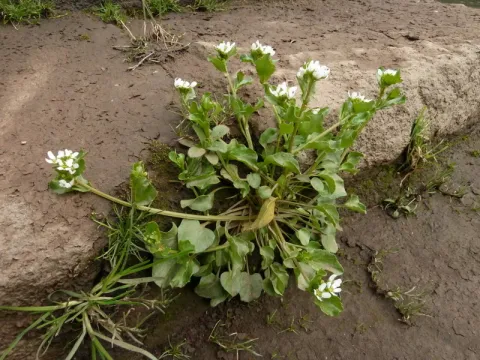
Cochlearia aestuaria is a distinctive plant species belonging to the Brassicaceae family. It is recognized for its unique ability to thrive in saline environments, such as coastal estuaries, which makes it a subject of agricultural interest for regions dealing with soil salinity issues. The plant is characterized by its succulent, rosette-forming leaves and its capacity for chemical adaptation to harsh conditions.
The native range of this plant is primarily concentrated in the southwestern regions of Europe, specifically along the coastlines of the Iberian Peninsula. It is highly adapted to maritime climates where moisture levels remain consistent throughout the year. Cultivation is currently experimental but shows promise in specialized horticulture where saline soils are present, offering a niche alternative to common leafy greens.
Botanically, Cochlearia aestuaria exhibits a biennial or perennial growth habit, depending on environmental stability. The leaves are the primary part of interest, typically thick and smooth, possessing a pungent, mustard-like flavor. Its small, white flowers appear in clusters, following a standard cruciferous structural pattern. Its root system is exceptionally efficient at managing mineral uptake, which serves as a physiological buffer against excessive sodium.
Agrotechnical requirements for this species revolve around mimicking its natural habitat's characteristics. Soil should be sandy or loamy with high drainage capacity to prevent waterlogging, even though the plant prefers moist environments. Key agronomic practices include:
- Maintaining soil pH levels between 6.5 and 7.5.
- Implementing precise irrigation to avoid soil surface crusting.
- Early season weed management to ensure seedlings establish without competition.
Commercially, the plant is primarily utilized as an edible wild herb or a niche culinary ingredient prized for its vitamin content and sharp flavor, similar to horseradish. Typical pests include flea beetles and caterpillars that frequently affect Brassicaceae crops. Managing these pests often requires a combination of integrated pest management (IPM) strategies, including biological control and careful monitoring to avoid chemical treatments that could degrade the culinary quality of the leaves.
Photo gallery