English scurvygrass
Cochlearia anglica
Description
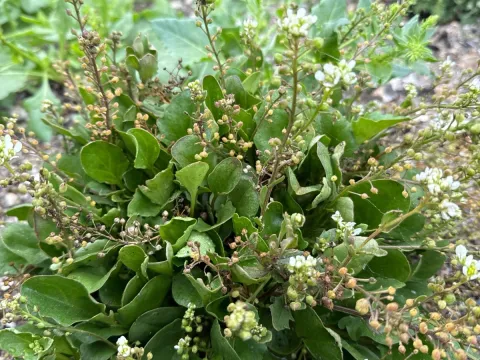
English scurvygrass (Cochlearia anglica) is a perennial or biennial herbaceous plant belonging to the Brassicaceae family. Recognized for its historical significance as a scurvy-preventing food source, it is currently cultivated for its spicy, pungent leaves that are rich in vitamin C and various glucosinolates, providing a flavor profile similar to horseradish or watercress.
The plant is native to the coastal regions of Western Europe, particularly around the British Isles, France, and parts of Scandinavia. Its natural habitat includes salt marshes, estuaries, and damp meadows. As an agricultural crop, it is best suited to regions with cool, maritime climates, as it requires consistent moisture and protection from intense summer drought or heat.
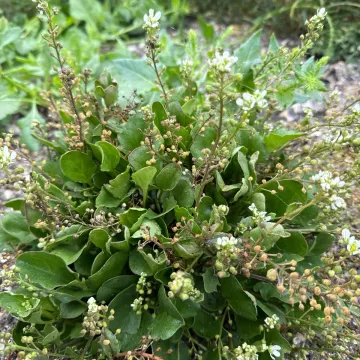
Botanically, the plant develops a rosette of fleshy, spoon-shaped basal leaves, which is characteristic of the genus name. The stems are typically erect, rising to a height of 15 to 30 centimeters. During the flowering stage, the plant produces dense racemes of small white flowers. The fruits are small, rounded or oblong silicles containing seeds that require specific moisture conditions for germination.
Agricultural requirements focus on maintaining soil fertility and moisture levels. The crop thrives in loamy, nutrient-dense soils and is highly sensitive to soil compaction and dehydration. Growers should ensure consistent irrigation, especially during the vegetative growth phase. In terms of fertilization, moderate applications of nitrogen-based fertilizers promote the production of high-quality, tender leaves for harvesting.
- Culinary usage: salads, condiments, and aromatic garnishes.
- Medical properties: high vitamin C content, anti-scorbutic.
- Cultural needs: partial shade in warmer climates.
- Pest management: vigilance against flea beetles and slugs.
Typical agricultural challenges include pests such as flea beetles, which are common to most Brassicaceae, and pathogens like clubroot or powdery mildew in poorly drained fields. Effective management involves implementing crop rotation and ensuring adequate space between plants to improve air circulation. By focusing on these factors, producers can consistently harvest a high-quality product throughout the growing season.
Photo gallery