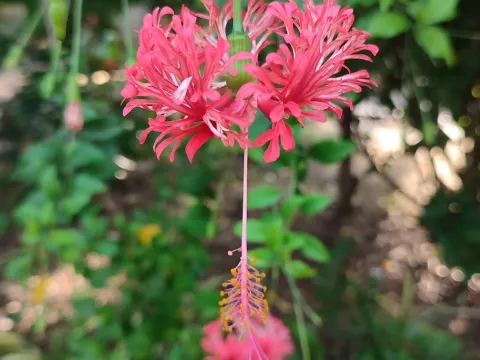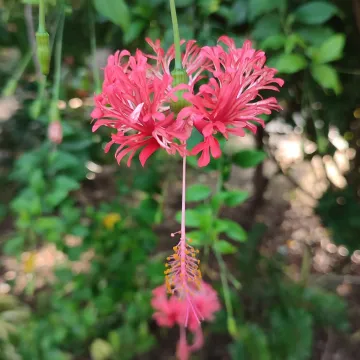
Coral hibiscus
Hibiscus schizopetalus (Mast.) Hook. f.
Description
Coral hibiscus (Hibiscus schizopetalus) is a perennial evergreen shrub belonging to the Malvaceae family. It is widely recognized for its distinctive, pendulous flowers characterized by deeply incised, fringed petals that curl backward, exposing a long, prominent central stamen column.
Native to tropical East Africa, specifically regions in Kenya, Tanzania, and Mozambique, this species thrives in humid, frost-free environments. It has been naturalized in many tropical regions worldwide, where it is cultivated extensively as an ornamental plant due to its continuous blooming habit and resistance to heat.
Botanically, the plant grows as a sprawling shrub reaching up to 4 meters in height if left unpruned. Its foliage is dark green, elliptical, and glossy, providing an attractive background for the intricate flowers. The plant is prized for its ability to attract pollinators, particularly hummingbirds and large butterflies, which are essential for its ecosystem interactions.
Cultural requirements involve full sun exposure and well-draining, nutrient-rich soil. It is highly sensitive to frost, which limits its outdoor cultivation to tropical and subtropical zones. Maintenance involves consistent watering, balanced fertilization during the growing season, and strategic pruning to manage its size and improve floral display.
The primary use of Coral hibiscus is in landscape architecture for hedges, focal points, or container gardening in cooler climates. Maintaining plant health requires monitoring for common pests and diseases:
- Spider mites, which thrive in dry air.
- Aphids, often found on new growth.
- Fungal leaf spots occurring in areas with poor air circulation.
Photo gallery