Turk's Cap Mallow
Hibiscus coccineus x Hibiscus laevis All. x Hibiscus moscheutos L.
Description
Turk's Cap Mallow is a distinctive perennial shrub belonging to the Malvaceae family. It is a complex hybrid originating from the genetic crossing of Hibiscus coccineus, Hibiscus laevis, and Hibiscus moscheutos, resulting in a vigorous plant that thrives in various landscape applications.
Native to North American wetland and woodland fringes, this plant has adapted to withstand fluctuating moisture levels, which makes it a resilient choice for specialized landscaping. Its agricultural presence is noted in both nursery production for ornamental trade and in public space design across subtropical regions.
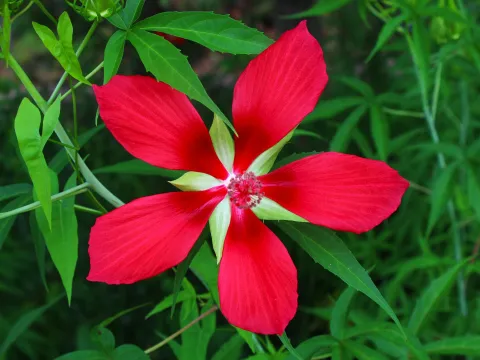
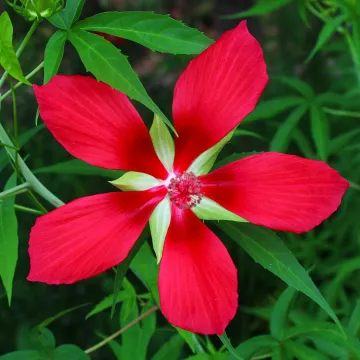
Botanically, the species is characterized by woody stems and large, lobed leaves. The flowers are the most notable feature, often exhibiting a tubular structure where the petals remain partially closed, protecting the reproductive organs from adverse weather. This unique morphology is a significant trait for both aesthetic and biological fitness.
Cultivation requires fertile, well-draining soil with an acidic to neutral pH level. The plant demands high sunlight intensity to initiate blooming, although it benefits from afternoon shade in extreme heat zones. Proper irrigation management is critical, as the roots require consistent moisture without being subjected to prolonged waterlogging.
From a maintenance perspective, Turk's Cap Mallow is susceptible to typical malvaceous pests like aphids and spider mites, particularly when kept in confined greenhouse environments. Preventive measures include ensuring good air circulation and timely pruning of spent blooms to encourage secondary flowering. Proper management results in a lush, woody shrub that provides significant visual appeal.
- Frequent organic matter enrichment of the soil.
- Consistent irrigation schedules to prevent wilting.
- Regular inspections for early signs of fungal infections.
- Dormancy management during winter months in temperate zones.
Photo gallery