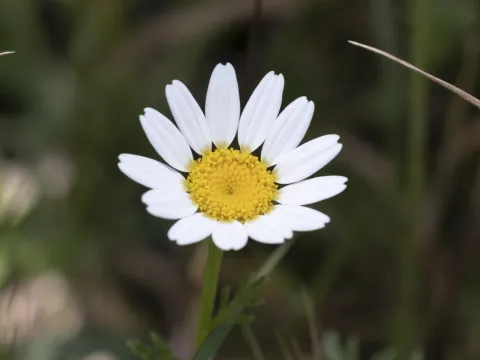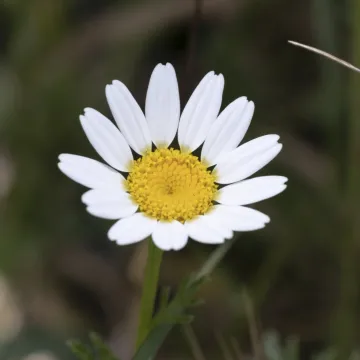

Dyer's chamomile
Cota altissima
Description
Dyer's chamomile (Latin: Cota altissima) is an annual herbaceous plant belonging to the Asteraceae family. Often associated with the genus Anthemis, it has been taxonomically reclassified into the genus Cota. In modern agriculture, it is primarily recognized as a weed species that can significantly impact crop yields if not properly managed, although it possesses biological traits of considerable interest to botanists.
The origin of this species is traced back to the Mediterranean region and Southeastern Europe. Today, it has established a wide distribution range throughout the Eurasian continent. It is particularly prevalent in agricultural landscapes, field margins, and fallow lands. Its ability to colonize disturbed soils makes it a common fixture in open fields where it competes aggressively for sunlight and soil nutrients.
The botanical structure of Cota altissima is characterized by a strong taproot and a branched stem that can grow up to 80 centimeters tall. The leaves are pinnately dissected, providing the plant with a distinctive appearance. Its inflorescences are solitary flower heads with white ray florets and yellow disk florets. These structures are designed to produce a large volume of seeds, facilitating rapid dispersal across farm fields.
Agricultural requirements for the species include well-drained, nutrient-rich soils, though it shows impressive plasticity, tolerating various soil types including somewhat saline environments. Effective management strategies focus on preventing seed set. Common agricultural practices include:
- Implementing diverse crop rotation.
- Utilizing mechanical cultivation to disrupt root development.
- Applying selective herbicides during the early seedling stage.
Regarding its utility and risks, the plant is rarely cultivated as a crop, though research into its phytochemical profile suggests the presence of bioactive compounds. The main threats to the plant's stability include fungal pathogens like powdery mildew and various sap-sucking insects such as aphids. These biological pressures typically regulate the population density of the plant in natural ecosystems, though intensive farming often requires human intervention to keep infestations in check.
Photo gallery