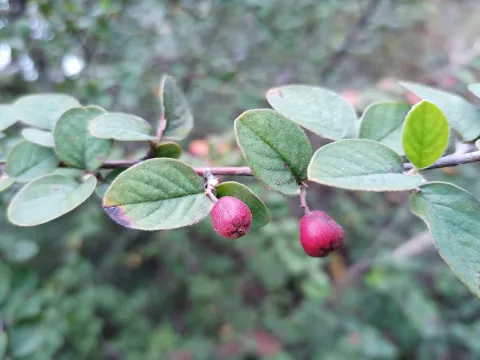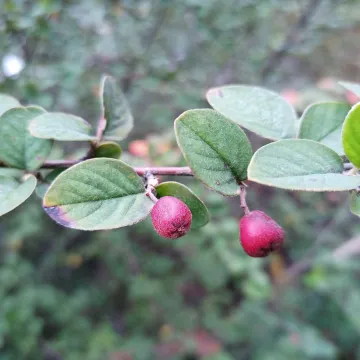
Diels cotoneaster
Cotoneaster dielsianus
Description
Diels cotoneaster (Cotoneaster dielsianus) is a deciduous ornamental shrub belonging to the Rosaceae family. It is widely recognized in horticulture for its graceful, arching habit and its spectacular display of bright red berries that persist well into the autumn and winter months, providing food for birds and visual interest for gardeners.
Originating from Western China, this species is naturally adapted to mountain slopes and forest edges. Its range has expanded through cultivation, and it is now common in temperate climates globally. It is considered a hardy plant, capable of thriving in various soil conditions, provided that it is not subjected to waterlogged environments.
Botanically, it forms a wide-spreading shrub, typically reaching 2–2.5 meters in height. The leaves are ovate, dark green on the upper surface, and covered with fine, gray hairs beneath, which gives the foliage a subtle grayish appearance. During June, it produces small, pink-tinged flowers that attract pollinators, followed by clusters of small, non-edible pomes.
Cultivation requirements are relatively straightforward. The shrub prefers full sun to light shade and requires well-drained soil to prevent root rot. It is drought-tolerant once established, making it suitable for low-maintenance landscapes. Pruning should be carried out in late winter or early spring to remove dead wood and encourage denser growth and better flowering.
The primary use of Diels cotoneaster is landscape and garden design:
- As a hedging plant for borders and property boundaries.
- In rock gardens or as a specimen plant in mixed shrub borders.
- For erosion control on embankments and sloping landscapes.
- In urban landscaping due to its tolerance to air pollution.
Like many members of the Rosaceae family, it can be susceptible to pests such as aphids, scale insects, and spider mites. Fungal diseases, including fire blight and leaf spot, may occur under conditions of poor air circulation. Regular inspection and the use of integrated pest management practices are essential to ensure the longevity and health of the planting.
Photo gallery