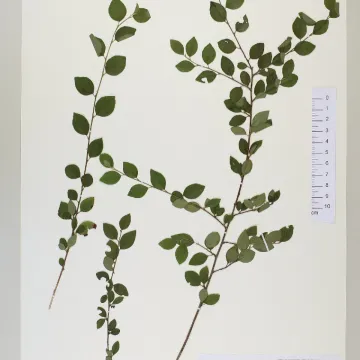

Hupeh cotoneaster
Cotoneaster hupehensis
Description
The Hupeh cotoneaster (Cotoneaster hupehensis) is a deciduous flowering shrub belonging to the Rosaceae family. Renowned for its graceful, arching branches and cascading habit, this species is highly valued in horticulture for its spectacular display of white flowers in late spring and vivid red berries in the autumn.
Native to the Hubei province of China, this species has become a staple in temperate climate landscapes due to its significant hardiness and ease of management. It thrives in diverse environmental conditions, making it an excellent candidate for both public park projects and private residential garden designs.
Botanically, Cotoneaster hupehensis features simple, alternate leaves that provide a lush green backdrop for its clusters of white flowers. The fruit, appearing as small, spherical, brilliant red pomes, persists well into the colder months. These berries are not only visually appealing but also provide a critical food source for local bird populations during late autumn.
Successful cultivation requires a location with full sun to partial shade. The shrub is remarkably adaptable to various soil types, provided that the ground is well-drained to prevent root rot. Maintenance is straightforward: a light annual pruning helps maintain the plant's natural arching shape, and mulch application is recommended to regulate soil moisture and suppress weed growth.
- Highly suitable for mass planting or as a specimen shrub.
- Excellent tolerance to urban pollution and wind.
- Provides seasonal visual interest from spring to late winter.
- Low maintenance requirements once the root system is established.
The primary agricultural concerns involve vigilance against fungal infections such as fire blight, which can be mitigated through strict pruning of infected branches and site sanitation. Pests like aphids and scale insects occasionally affect the foliage, but these can be effectively managed with targeted horticultural oils or standard integrated pest management techniques.
Photo gallery