
Cotoneaster induratus
Cotoneaster induratus
Description
Cotoneaster induratus is a perennial ornamental shrub belonging to the Rosaceae family. Within professional landscaping and cultivation, this species is highly regarded for its robust structure, dense foliage, and ornamental berries that remain on the branches throughout the late autumn and early winter months.
The plant originates from the mountainous regions of Central and Eastern Asia, where it evolved to withstand harsh temperature fluctuations and nutrient-poor soils. Its current distribution range covers temperate regions globally, where it is frequently utilized for erosion control and as a structural element in formal gardens.
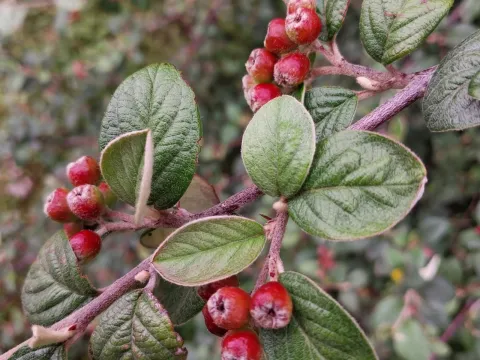
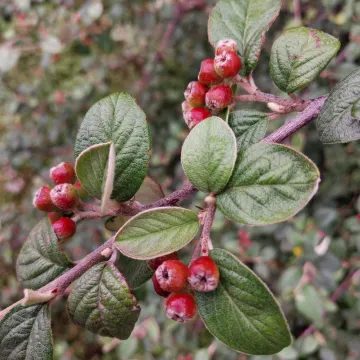
Botanically, Cotoneaster induratus is classified as a slow-growing evergreen or semi-evergreen shrub with small, coriaceous dark green leaves. During the spring, it produces subtle pinkish-white flowers, which are followed by bright red pomaceous fruits. The root system is deep and expansive, providing significant drought tolerance once established.
Optimal cultivation requires well-drained, neutral-to-alkaline soil profiles. The shrub performs best in full sun but maintains good health in partial shade. Agronomic management involves systematic pruning to maintain canopy density, balanced mineral fertilization in early spring, and general sanitation to remove dead or diseased wood.
Key хозяйственные applications include:
- Installation of impenetrable privacy hedges and borders.
- Stabilization of embankments and sloped terrain.
- Enhancement of rock gardens and xeriscapes.
- Municipal landscaping in urban environments with high air pollution.
The species may be susceptible to fungal pathogens such as powdery mildew or fire blight under conditions of poor air circulation and excessive humidity. Common pests include aphids and mites. Proactive scouting and the application of integrated pest management practices are essential to ensure the longevity and vitality of the planting.
Photo gallery