Thyme-leaved cotoneaster
Cotoneaster integrifolius
Description
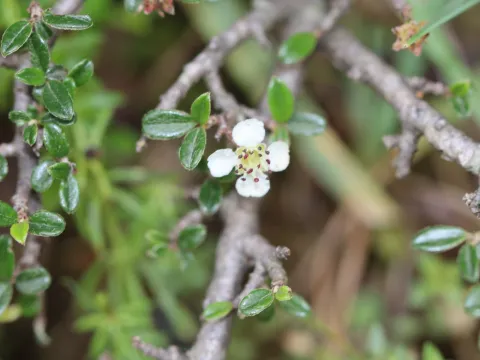
The thyme-leaved cotoneaster (Cotoneaster integrifolius) is an evergreen or semi-evergreen procumbent shrub belonging to the Rosaceae family. It is widely recognized for its low-growing, mat-forming habit, which features dense branches covered in small, glossy, deep green foliage that persists throughout the year.
Originating from the mountainous regions of the Himalayas and Western China, this species has evolved to thrive in rocky and well-drained environments. Its natural habitat contributes to its robustness, making it a reliable choice for cultivation in temperate climates across the world.
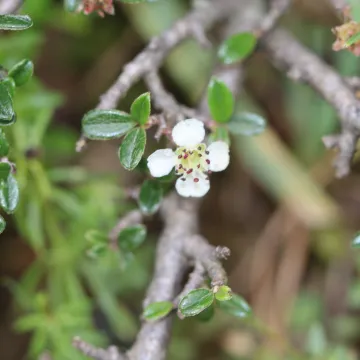
Botanically, the plant is distinguished by its slow growth rate and creeping stems that often root where they touch the soil. In spring, it produces small, solitary white to pale pink flowers, which are followed by bright red berries that remain on the plant well into the winter months, providing food for birds and visual interest.
Cultivation requires minimal intervention. The species thrives in full sun or partial shade and demands soil with excellent drainage to prevent root rot. It is notably drought-tolerant once established, making it suitable for low-maintenance landscapes, although it performs best when provided with occasional organic fertilization in early spring.
In landscaping, it is primarily used as a ground cover, for erosion control on slopes, and as a structural element in rock gardens. Potential issues include pests such as aphids or spider mites, and diseases like powdery mildew, which are best managed through good air circulation and regular inspection of the foliage.
Photo gallery