Moupine cotoneaster
Cotoneaster moupinensis
Description
The Moupine cotoneaster (Cotoneaster moupinensis) is a prominent deciduous shrub belonging to the Rosaceae family. It is widely recognized for its robust growth habit, structural elegance, and ornamental qualities, making it a valuable plant for both horticultural projects and private landscape design.
The species is native to the mountain regions of China, particularly the Sichuan province. Due to its adaptation to high-altitude environments, it exhibits significant resilience to diverse weather patterns. It thrives in temperate regions where it can tolerate cold winter temperatures without specialized protection, provided it is well-established.
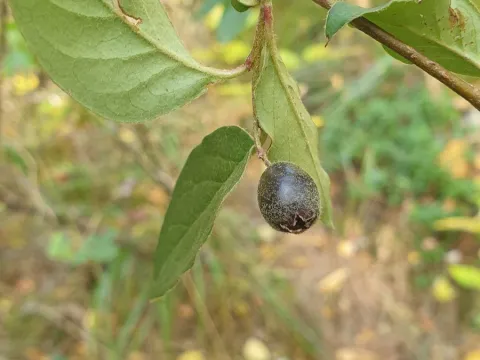
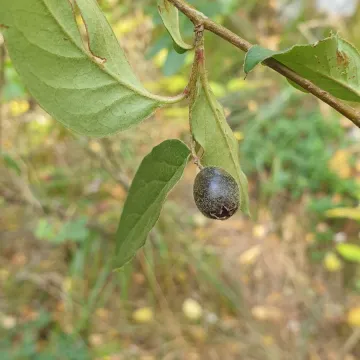
Botanically, the plant is characterized by its upright, branched structure, often reaching 3–4 meters in height. Its foliage is broadly ovate, dark green, and glossy, transforming into vibrant hues of yellow and crimson during the autumn months. The plant produces distinctive black, persistent berries that provide visual interest throughout the winter season.
Cultivation requirements involve planting the shrub in well-drained soil with good access to sunlight or partial shade. While it is adaptable to poor soil conditions, optimal development is achieved in fertile, slightly acidic substrates. Maintenance involves regular pruning to manage its size and ensure a dense, healthy growth pattern, particularly when utilized as hedging.
The practical application of Cotoneaster moupinensis spans from creating functional windbreaks and living hedges to stabilizing sloping terrain. Its deep root system prevents soil erosion, while the persistent berries provide essential nutrition for avian wildlife during harsh winters, making it a sustainable choice for ecological landscape design.
- Planting is best performed during dormant periods in early spring or late autumn.
- Irrigation should be regular during the first year after planting to ensure deep rooting.
- Monitor for common pests such as aphids and treat with biological or chemical control if necessary.
- Fertilization with balanced nutrients in early spring promotes vigorous foliage development.
Photo gallery