Rehder's cotoneaster
Cotoneaster rehderi
Description
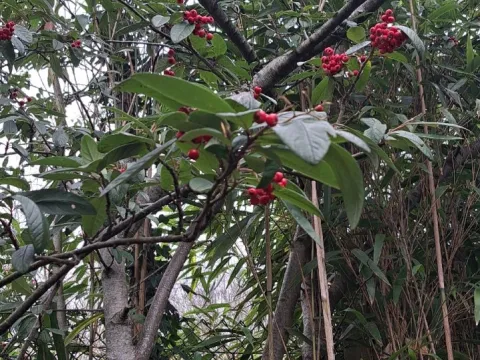
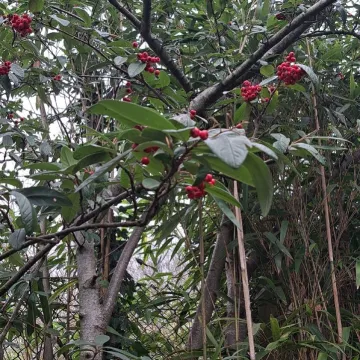
Rehder's cotoneaster (Cotoneaster rehderi) is a deciduous or semi-evergreen shrub belonging to the Rosaceae family. It is highly valued in horticulture for its elegant growth habit, abundant flowering, and decorative fruits that provide significant visual interest in autumn and winter gardens.
The species originates from the mountainous regions of China. Due to its natural adaptation to rugged terrain, it has become a popular choice for cultivation in temperate climate zones worldwide. It is frequently employed in landscape design for mass planting, slope stabilization, and as an attractive specimen plant in public and private gardens.
Botanically, this shrub is characterized by its arching stems and ovate leaves with pointed tips. The flowers are small, typically appearing in clusters with white or light pink petals. The berries are bright red or orange, serving as a primary food source for local bird populations during the dormant winter months, which adds ecological value to the landscape.
Regarding agrotechnical requirements, Rehder's cotoneaster thrives in full sun to partial shade and is highly adaptable to a variety of soil types. However, it performs best in well-drained, fertile soil. Once established, the shrub exhibits excellent drought tolerance, requiring minimal supplemental irrigation unless conditions are extremely dry during the summer.
- Highly responsive to pruning, making it ideal for hedges.
- Excellent tolerance to urban pollution and wind.
- Low nutrient requirements, though spring mulching can boost growth.
- Propagation is usually performed via cuttings or seed germination.
While generally robust, the plant can be susceptible to common pests such as aphids, scale insects, and spider mites. Pathological issues like fire blight or leaf spot may occur if air circulation is poor or if the soil remains constantly waterlogged. Proper spacing and proactive maintenance, including the removal of dead wood, are essential for keeping the shrub healthy and vigorous.
Photo gallery