Cotoneaster tengyuehensis
Cotoneaster tengyuehensis
Description
Cotoneaster tengyuehensis is a perennial shrub belonging to the Rosaceae family. It is widely recognized for its high ornamental value, characterized by its dense foliage, compact growth habit, and the production of vibrant, persistent berries that provide significant winter interest in temperate gardens.
Originating from the mountainous regions of China, particularly in the Yunnan province, this species has evolved to thrive in high-altitude environments. This evolutionary history translates into a resilient plant capable of adapting to various temperate climates, provided that basic environmental conditions are met.
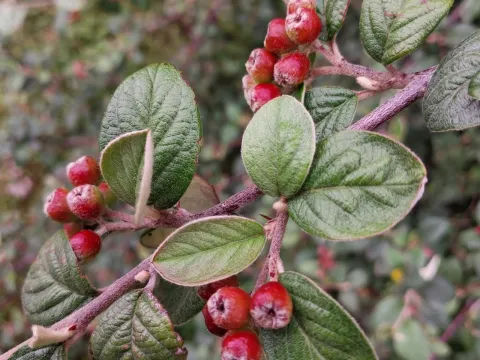
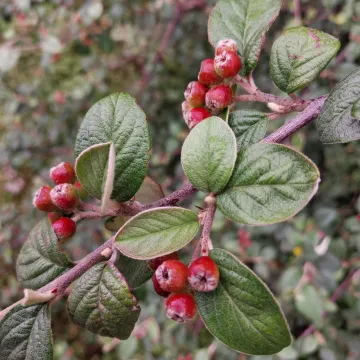
Botanically, the plant features small, glossy, deep green leaves and a complex network of stems. During the late spring, the plant produces numerous small, white flowers that are highly attractive to pollinators. The fruit, which develops in late summer and persists into winter, is a drupe-like pome that adds distinct color to the landscape.
Cultivation requirements involve planting in well-drained, fertile soil, as the roots are sensitive to waterlogging. The species prefers partial to full sun exposure. Essential agronomic practices include regular light pruning to maintain the desired shape and occasional fertilization in early spring to support vigorous growth and fruit production.
The primary use of Cotoneaster tengyuehensis is in horticultural landscaping, specifically for formal hedges, slopes stabilization, and garden borders. While generally robust, gardeners should be vigilant against pests like aphids and scale insects, as well as fungal issues like powdery mildew, which can be managed with standard nursery practices.
Photo gallery