Sunn hemp
Crotalaria juncea L.
Description
Sunn hemp (Crotalaria juncea L.) is a tropical legume widely recognized for its exceptional growth rate and biomass production. As a member of the Fabaceae family, it has become a popular choice for sustainable agriculture due to its significant contribution to soil health and fertility management.
Originating from India, this crop is now naturalized in many tropical and subtropical regions around the globe. It thrives in warm climates and is highly valued for its ability to grow vigorously during the summer months. Its extensive geographic reach is a testament to its adaptability to various environmental conditions, provided that temperatures remain high.
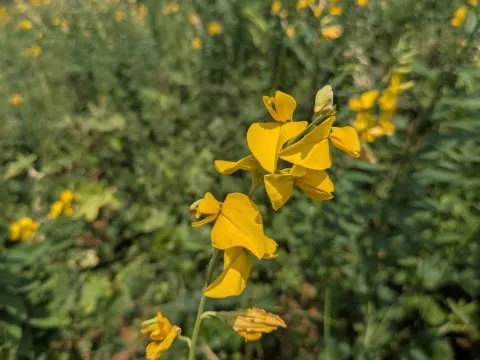
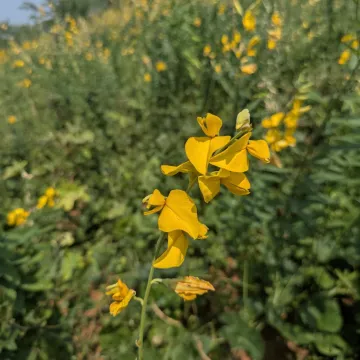
The plant is characterized by a straight, fibrous stem that can reach significant heights within a few months of growth. Its leaves are lanceolate, and it produces racemes of bright yellow flowers. One of its most important biological traits is its ability to fix atmospheric nitrogen through symbiosis with Rhizobium bacteria, which serves as a natural fertilizer for subsequent crops.
Regarding cultivation requirements, sunn hemp is quite hardy. It prefers well-drained soils and is remarkably drought-tolerant once established. It does not require high levels of nitrogen fertilization, as it fixes its own supply. Farmers typically sow the seeds when the soil is warm, allowing for rapid germination and establishment before the plant forms a canopy to outcompete local weeds.
Sunn hemp serves several vital agricultural and industrial purposes:
- Improving soil structure and increasing organic matter through green manuring.
- Suppressing soil-borne pests, particularly plant-parasitic nematodes.
- Providing high-quality bast fiber for paper, twine, and textile manufacturing.
- Serving as an effective cover crop to prevent soil erosion during heavy rainfall.
Despite its robustness, producers must monitor the crop for potential issues. Certain pests, such as leaf-feeding insects or aphids, can be problematic in the seedling stage. Additionally, while the crop is resistant to many diseases, proper management of irrigation and rotation cycles is essential to prevent fungal outbreaks during periods of prolonged high humidity.
Photo gallery