Showy crotalaria
Crotalaria spectabilis Roth
Description
Showy crotalaria (Crotalaria spectabilis) is an annual legume belonging to the family Fabaceae. It is widely recognized in modern agriculture as an effective cover crop, valued primarily for its ability to improve soil structure and act as a natural phytosanitary agent against harmful soil pathogens.
Originating from tropical regions of Asia, the plant has expanded its range across various tropical and subtropical zones. It thrives in warm climates and requires significant sunlight to reach its full growth potential. Its rapid biomass accumulation makes it an ideal choice for short-season soil restoration programs.
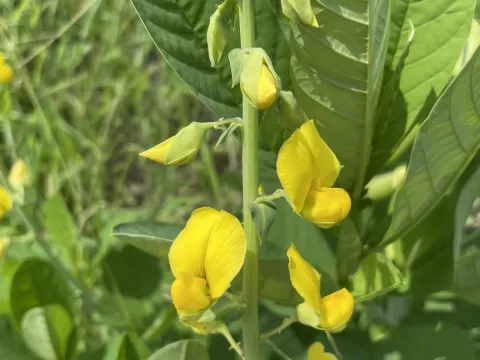
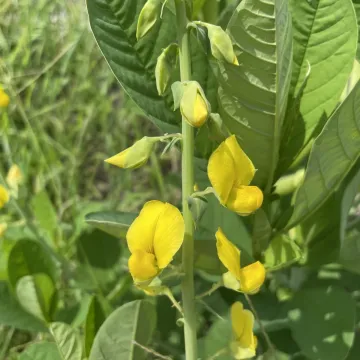
The plant is characterized by an upright habit, alternate leaves, and racemes of bright yellow flowers. Its root system is particularly robust, often forming deep taproots that help break up compacted soil layers while establishing symbiotic relationships with nitrogen-fixing bacteria to enrich the field with essential nutrients.
In terms of agricultural requirements, showy crotalaria is strictly heat-loving and cannot survive frost. Planting should occur only after soil temperatures are consistently high. While it adapts to a variety of soil types, including sandy and infertile soils, proper management involves maintaining adequate moisture during the germination stage to ensure a uniform stand.
The primary agricultural use of showy crotalaria is as green manure and a biological control for plant-parasitic nematodes. Root exudates are known to suppress the reproduction of nematodes, making it a critical crop for fields used to grow high-value vegetables. It is important to note that the plant contains alkaloids, making it unsuitable for forage or animal feed.
Disease management involves monitoring for potential fungal infections during periods of excessive humidity or poor soil drainage. Pest issues are relatively minimal, though leaf-feeding insects may occasionally occur. Farmers are advised to terminate the crop by mowing or incorporating it into the soil before the plant reaches the woody seed-production stage to optimize nutrient recycling.
Photo gallery