Croton bonplandianus
Croton bonplandianus Baill.
Description
Croton bonplandianus Baill. is an herbaceous perennial plant belonging to the Euphorbiaceae family. While often regarded as an invasive weed in various agricultural landscapes, it holds significant biological interest due to its resilience and unique secondary metabolite profile, which makes it a subject of ongoing phytochemical research.
Originating from the tropical regions of South America, the species has successfully naturalized in many parts of the world, particularly in Southeast Asia. It is frequently found on fallow lands, roadside verges, and agricultural borders, showcasing a high degree of phenotypic plasticity that allows it to thrive in diverse climatic zones, primarily in the tropics and subtropics.
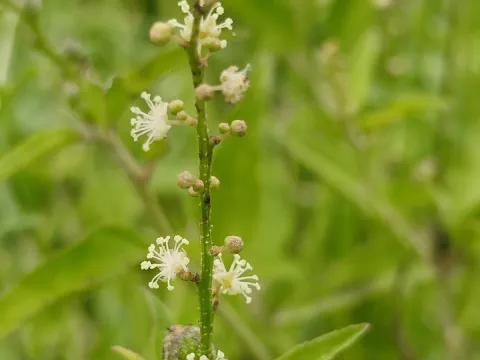
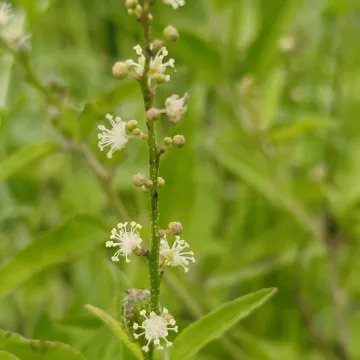
The plant exhibits a shrub-like habit, growing up to one meter in height with pubescent stems and alternate, lanceolate leaves. It is monoecious, bearing small, distinct male and female flowers on terminal racemes. The reproductive strategy relies on the explosive dehiscence of its three-lobed seed capsules, ensuring efficient dispersal of seeds over significant distances, which facilitates its rapid colonization of new areas.
Regarding agrotechnical requirements, the plant demands high solar radiation and well-drained soils to reach optimal growth. It is highly drought-tolerant, which contributes to its status as a competitive weed in agricultural systems. Management strategies typically involve integrated weed management (IWM) programs, utilizing a combination of mechanical removal and targeted herbicide applications to prevent seed bank establishment in commercial fields.
Economically, while often controlled, Croton bonplandianus is studied for its potential in producing bio-pesticides and pharmaceuticals. Its tissues contain diverse compounds, including terpenoids and flavonoids, which show promise in developing antimicrobial and insecticidal agents. Ongoing research aims to harness these properties for sustainable agriculture, turning a common weed into a source of valuable biochemical raw materials.
- High seed production and dispersion capability.
- Tolerance to poor soil and drought conditions.
- Rich in bioactive secondary metabolites.
- Potential for industrial biocide production.
Photo gallery