Cut Leaf Hibbertia
Hibbertia cuneiformis (Labill.) Sm.
Description
Cut Leaf Hibbertia (lat. Hibbertia cuneiformis) is a prominent evergreen shrub belonging to the Dilleniaceae family. It is native to the coastal regions of South-West Western Australia, where it has evolved to thrive in sandy soils and exposed maritime environments.
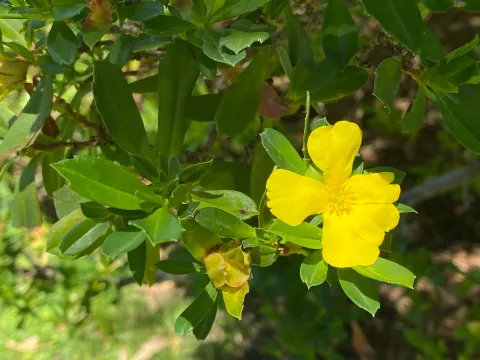
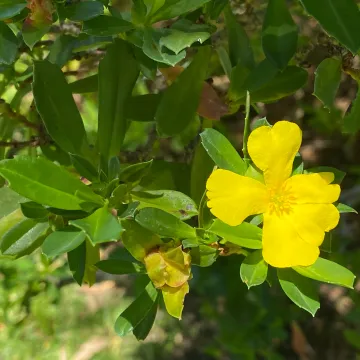
Botanically, this species is recognized by its stiff, wedge-shaped leaves that often exhibit a distinct, coarsely-toothed margin at the apex. The plant develops into a sturdy shrub, typically reaching 2 to 3 meters in height. During the flowering season, it produces vibrant, bright yellow, five-petaled blossoms that are highly attractive to local pollinators and garden enthusiasts alike.
Climate requirements for this plant are centered around warm, sunny, and well-ventilated conditions. It is best adapted to regions with a Mediterranean climate, where it receives ample sunlight. While it exhibits moderate drought tolerance once established, consistent soil moisture during the spring and summer months is crucial for optimal development and flowering performance.
Soil and agrotechnical management are critical to the success of this crop. The plant requires a porous, well-draining soil medium, ideally sandy or rocky, with a low phosphorus content. Over-fertilization, especially with phosphorus-rich inputs, can be detrimental to its health. Providing an efficient drainage system is mandatory to prevent root rot, which is the most significant physiological disorder for this species.
In terms of usage, it is primarily cultivated as an ornamental plant for landscaping, hedges, and windbreaks in suitable climate zones. Pests and diseases are generally manageable, but gardeners should monitor for common sap-sucking insects and fungal infections that occur due to high humidity and poor aeration. Routine pruning helps maintain the shrub's shape and encourages denser foliage growth.
Photo gallery