Spiked Hibbertia
Hibbertia spicata F.Muell.
Description
Spiked Hibbertia (Hibbertia spicata) is a distinctive evergreen shrub belonging to the Dilleniaceae family. Native to Australia, this plant is recognized for its unique inflorescences and structural growth, making it a point of interest for botanical enthusiasts and gardeners focusing on arid-adapted species. Its name derives from the arrangement of flowers that form a spike-like structure, setting it apart from other members of the genus.
The plant originates from the southwest of Australia, where it thrives in environments characterized by sandy soils and seasonal moisture patterns. Its natural distribution is linked to heathlands and woodland areas. Because of its native environment, it has evolved to be highly tolerant of heat and sunlight, functioning effectively in landscapes that require low-maintenance, drought-resistant plant choices.
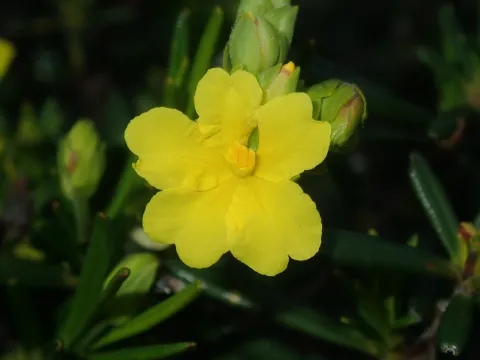
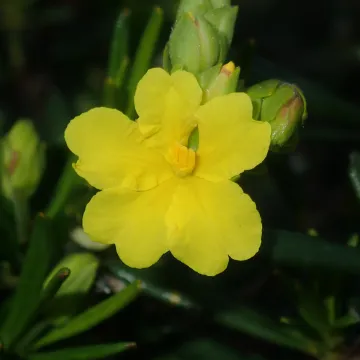
Botanically, the plant features rigid, narrow foliage and vibrant, yellow flowers. The growth habit is typically bushy, providing excellent cover and a dense texture in garden beds. The root system is resilient and capable of penetrating rocky or sandy substrates to extract water, which is a key adaptive feature that allows it to survive in naturally nutrient-poor soils.
Regarding cultivation, the key requirement for success is excellent drainage. The plant is prone to root rot if kept in consistently damp or heavy clay soils. It prefers full sun and requires minimal fertilization, as it is adapted to low-nutrient conditions. Occasional pruning after flowering is recommended to keep the shrub tidy and to encourage more vigorous growth in the following season.
- Adaptation to poor and sandy soil conditions.
- Low water requirements once established.
- Attractive yellow blooms throughout the flowering season.
- Minimal pest susceptibility in open garden settings.
The primary use of Spiked Hibbertia is in ornamental horticulture. It is frequently incorporated into native Australian gardens or xeriscapes where water conservation is prioritized. While it is not a traditional agricultural crop, its value in the nursery industry continues to grow. Common pests include aphids and mites, which are typically managed through standard integrated pest management practices to ensure the plant's health and aesthetic appeal.
Photo gallery