Stalked guinea flower
Hibbertia racemosa (Endl.) Gilg
Description
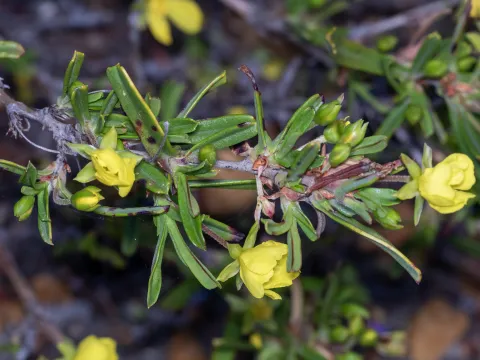
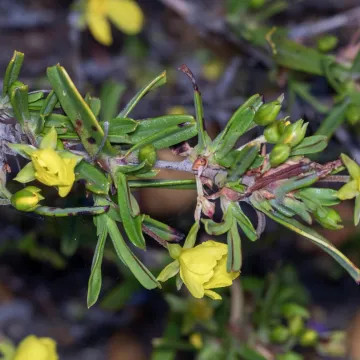
Hibbertia racemosa, commonly known as the stalked guinea flower, is a perennial evergreen shrub belonging to the family Dilleniaceae. Native to Australia, this plant is recognized for its vibrant yellow flowers and compact growth habit, making it an attractive addition to horticultural displays and Mediterranean-style gardens.
The natural range of this species is primarily concentrated in the southwestern regions of Western Australia. It has evolved to thrive in environments with specific seasonal rainfall patterns and sandy, well-draining soils. While not a primary agricultural commodity, it holds significance in the nursery industry and specialized landscaping sectors.
Botanically, the plant is characterized by its woody stems and lanceolate foliage, which is often dense and leathery. The inflorescences are arranged in racemes, displaying the characteristic bright yellow, five-petaled flowers typical of the genus Hibbertia. These blooms are highly attractive to local pollinators and appear consistently during the growing season.
Regarding agronomic requirements, Hibbertia racemosa demands excellent drainage, as the roots are highly susceptible to rot in waterlogged conditions. It prefers slightly acidic to neutral soil and performs best in full sun or partial shade. Maintenance involves periodic pruning to encourage denser branching and the removal of spent flowers to promote overall plant vigor.
- Requires well-draining, sandy loam soil.
- Avoid over-fertilization with high-phosphorus compounds.
- Ensure adequate air circulation to prevent fungal issues.
- Monitor for common pests like scale insects or mites.
Diseases affecting this species are predominantly related to soil moisture management, with root pathogens representing the main risk. Pests such as aphids or spider mites can become problematic in sheltered or poorly ventilated areas. Preventive care, focusing on correct soil moisture and proper sunlight exposure, remains the most effective strategy for cultivation.
Photo gallery