Cymopterus anisatus
Cymopterus anisatus
Description
Cymopterus anisatus is a perennial herbaceous plant belonging to the Apiaceae family. It is widely recognized for the distinct anise-like fragrance emitted by its foliage when crushed, a trait that characterizes the species. As a member of the celery family, it displays the classic umbel inflorescences common to the group.
The plant originates from the arid regions of western North America. Its natural habitat includes rocky slopes and high desert environments, where it has evolved to thrive under harsh climatic conditions. These regions are characterized by long, dry summers and cool, wet winters, which define the plant's specific growth cycle.
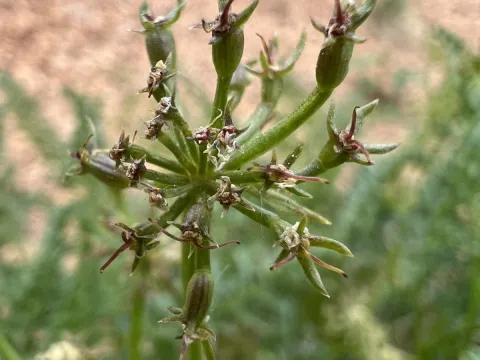
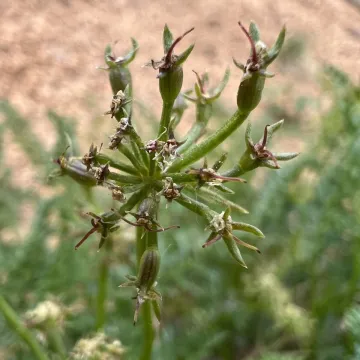
Botanically, it features a deep taproot designed to sustain the plant during extended droughts. The foliage is typically low-growing, forming a dense rosette of finely divided leaves. The inflorescences appear on short, stout stems, bearing small flowers that produce seeds with distinct winged edges, which aid in wind dispersal across the open landscape.
Successful cultivation requires soil conditions that mimic its native environment, primarily emphasizing exceptional drainage. Heavy, clay-based soils are detrimental to this species, often leading to root rot. Ideally, it should be planted in gritty or sandy, alkaline-neutral soils with full sun exposure to ensure proper development and flowering.
The primary use of Cymopterus anisatus is currently restricted to botanical research and inclusion in specialist xerophytic gardens due to its unique aesthetic. While not a commercial crop, its aromatic qualities remain a point of interest for ethnobotanists. Potential threats include root rot from overwatering and various aphid species that may infest the leaves during the early spring growth phase.
Photo gallery