Hall's cymopterus
Cymopterus hallii
Description
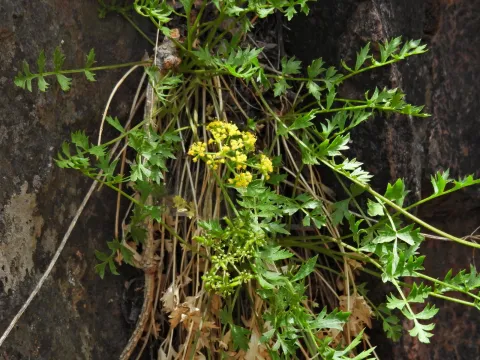
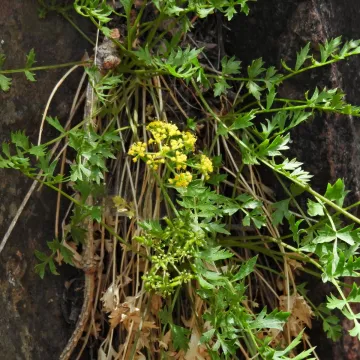
Hall's cymopterus (Cymopterus hallii) is a perennial herbaceous plant belonging to the Apiaceae family. As a specialized species, it has evolved to thrive in the harsh environments of the North American desert regions, demonstrating remarkable resilience to environmental stressors.
The native range of this species is primarily located in the Southwestern United States, including areas within Colorado and Utah. The plant is typically found in arid habitats, exposed slopes, and rocky terrain where it has adapted to survive extreme fluctuations in temperature and limited precipitation.
Botanically, Hall's cymopterus is characterized by a deep, sturdy taproot and a rosette of finely dissected leaves. During its active growth phase, it produces characteristic umbel inflorescences. This structural design is an evolutionary adaptation that facilitates efficient nutrient storage and energy conservation during the dormant summer or winter months.
Agricultural requirements for this species demand well-drained, sandy or gravelly soils. It is critical to avoid waterlogged conditions, as the root system is highly susceptible to rot if moisture levels remain high for extended periods. Cultivation success depends on providing full sun exposure and minimal irrigation, mimicking its natural arid habitat.
The primary utility of this plant currently resides in scientific research and xeriscaping, as it offers aesthetic and ecological value for drought-tolerant landscaping. While not a conventional crop, growers should monitor for typical Apiaceae pests like aphids or root-fungus pathogens, which can be managed through proper soil drainage and adequate spacing.
Photo gallery