Lemmon's spring-parsley
Cymopterus lemmonii
Description
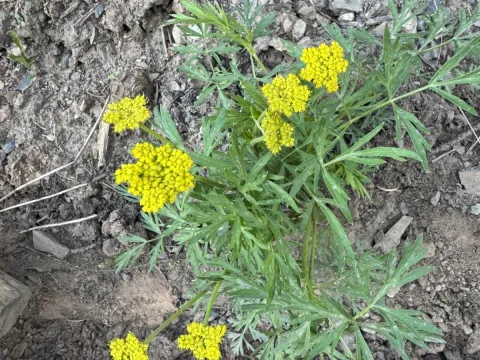
Lemmon's spring-parsley (Cymopterus lemmonii) is a perennial herbaceous plant belonging to the Apiaceae family. While not a conventional crop for large-scale industrial farming, it is a plant of significant botanical interest due to its specialized adaptations to high-altitude and arid environments in the southwestern United States.
Native to the mountains of Arizona and New Mexico, this species thrives in challenging habitats such as rocky slopes and dry, gravelly soils. Its evolutionary development has favored drought tolerance and the ability to complete its vegetative cycle during short spring windows when moisture is available.
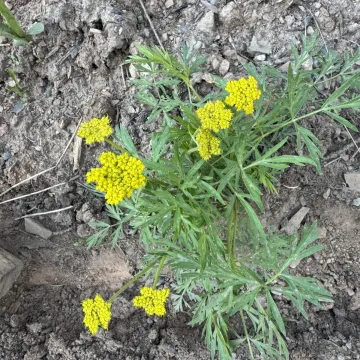
Botanically, the plant features finely dissected foliage and characteristic umbellate inflorescences. It develops a deep, resilient root system that allows it to persist in low-nutrient substrates. The plant's morphology is highly specialized, allowing it to minimize water loss and maximize photosynthetic efficiency during short periods of favorable weather.
Successful cultivation of this species requires mimicking its natural environment. The primary agricultural requirement is exceptional soil drainage; the plant is highly intolerant of waterlogged soil, which quickly leads to root rot. Soils should be sandy or stony with low fertility, as over-fertilization can disrupt the plant's natural growth rhythms and vigor.
Regarding its use, Lemmon's spring-parsley is primarily studied for its phytochemical potential and value in ecosystem restoration projects. Pathogens primarily consist of fungal root diseases triggered by excess moisture, while insect pests are generally limited to specific herbivores that feed on the foliage. Crop management focuses on maintaining dry conditions and minimal soil disturbance.
Photo gallery