Greville's Dicranella
Dicranella grevilleana
Description
Dicranella grevilleana, commonly known as Greville's Dicranella, is a moss species belonging to the Dicranaceae family. While not an agricultural crop in the economic sense, it is a significant element in various ecosystems, often serving as a pioneer species that stabilizes soil on slopes and damp surfaces.
The species is primarily native to the Northern Hemisphere, showing a preference for temperate and arctic regions. Its habitat is characterized by moist, mineral-rich soils, often found near water bodies, on exposed clay banks, or in disturbed areas where it serves as a colonization agent for mossy vegetation.
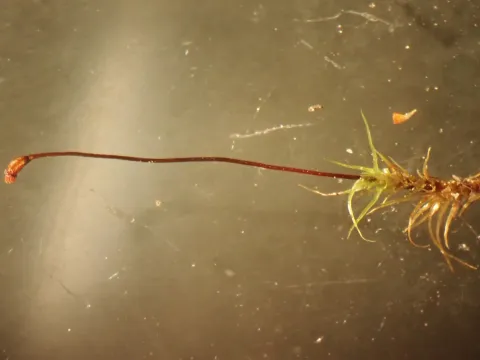
From a botanical perspective, this species forms small, dense tufts consisting of erect, leafy stems. The leaves are typically lanceolate and have a distinct structure. The sporophytes arise from the tips of the stems, carrying capsules that facilitate the dispersal of spores, which is the primary method of reproduction for this moss.
Regarding its ecological requirements, Dicranella grevilleana thrives in humid environments with high atmospheric moisture and cool temperatures. It prefers stable soil pH levels and is often found in areas that have been cleared of competing vascular vegetation. It is highly sensitive to changes in hydrological conditions and soil quality.
In terms of agricultural relevance, this moss acts as an indicator species for soil moisture management. It does not suffer from typical pests or diseases associated with traditional crops, but it is highly susceptible to habitat destruction, chemical runoff, and soil dehydration. Its role is strictly ecological, contributing to biodiversity rather than agricultural production.
Photo gallery