Digitaria macractenia
Digitaria macractenia
Description
Digitaria macractenia is a perennial grass species belonging to the Poaceae (grass) family. In agricultural practice, this plant is recognized for its robustness and ability to thrive in diverse environmental conditions, making it an interesting subject for forage production and sustainable grassland management.
The species originated in warmer regions, exhibiting a wide distribution across tropical and subtropical environments. Its evolutionary adaptation allows it to flourish in areas with long growing seasons, provided there is sufficient soil moisture. It is frequently studied for its role in maintaining soil structure and biodiversity in pasture-based systems.
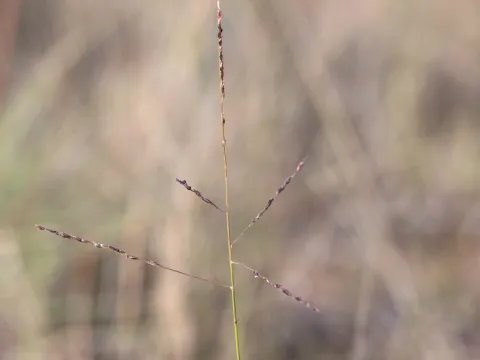
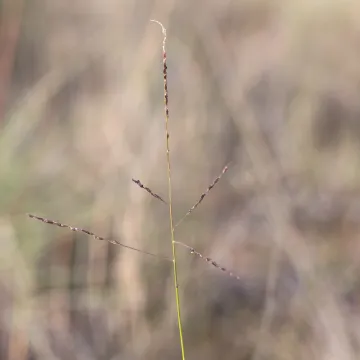
Botanically, Digitaria macractenia is characterized by its tufted growth habit and palmately branched inflorescences. The leaves are typically narrow and linear, adapted to minimize water loss through transpiration. The root system is fibrous and dense, which is highly efficient at nutrient uptake and soil stabilization, making it valuable for preventing erosion in sensitive lands.
Agrotechnical requirements for this crop involve a focus on soil aeration and nutrient management. It thrives in well-drained loamy soils and requires adequate nitrogen levels during the peak growth phase to maximize biomass yield. While it is quite hardy, managing the planting density is essential to ensure optimal light interception and to prevent the build-up of humidity that can lead to disease.
The primary economic use of this grass is in livestock farming as a sustainable source of fodder. It can be utilized through controlled grazing or harvested for hay production. Disease management typically involves monitoring for common grass pathogens, such as rusts and smuts, while pest control focuses on aphids and grass-eating insects that may proliferate in dense stands if not properly managed through rotational grazing or periodic harvesting.
Photo gallery