Small-flowered crabgrass
Digitaria parviflora
Description
Small-flowered crabgrass (Digitaria parviflora) is a perennial or annual grass belonging to the Poaceae family. While often categorized as wild forage, it represents a significant botanical entity within the genus Digitaria, known for its resilience and adaptability in diverse tropical and subtropical environments.
The species originates from Southeast Asia and Australia. It has established a wide distribution range across these regions, successfully colonizing open grasslands, roadsides, and abandoned agricultural sites. Its ability to thrive in poor soils has made it a common sight in varying rural landscapes.
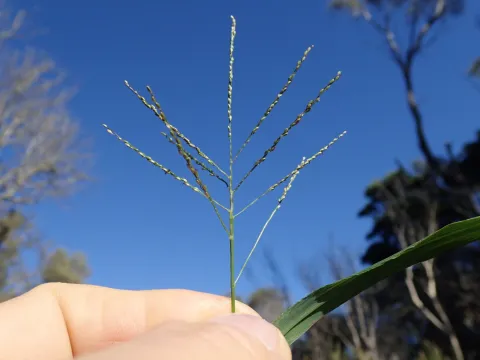
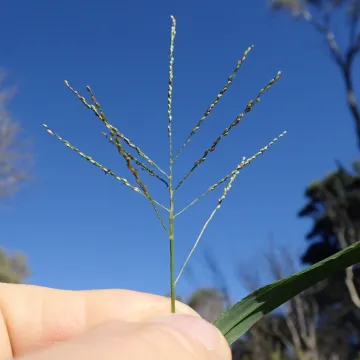
From a botanical perspective, the plant is characterized by its slender stems and characteristic inflorescence consisting of several spreading racemes. The root system is fibrous and effective at soil stabilization. The plant typically reaches heights between 30 and 80 cm, displaying a clump-forming habit that provides sufficient biomass for light grazing activities.
Regarding cultivation requirements, Digitaria parviflora prefers well-drained sandy or loamy substrates. It exhibits high tolerance to direct sunlight and requires moderate rainfall for optimal development. In agricultural practice, it is usually managed as a component of mixed pasturelands rather than as a single-crop culture, requiring basic maintenance like periodic mowing or controlled grazing to ensure vigor.
The primary economic use of this species is as fodder for livestock, contributing to the nutritional base of extensive pastoral systems. Key challenges in its maintenance include susceptibility to various leaf-spot fungi under humid conditions and potential infestation by seed-feeding insects, which can impact the long-term sustainability of the stand if not monitored correctly.
Photo gallery