Digitaria radicosa
Digitaria radicosa
Description
Digitaria radicosa is an annual herbaceous plant belonging to the grass family Poaceae. While often categorized as a weed in modern agricultural systems, it is a significant botanical entity in tropical and subtropical regions of Asia and Australia, where it plays a notable role in the local ecosystems and grazing lands.
The plant originates from the warmer regions of Asia. Its range has expanded due to its high adaptability to various habitats, including disturbed sites, roadsides, and cultivated fields. It prefers sunny environments and is known for its ability to colonize areas with poor or nutrient-depleted soils, showing a remarkable resilience to environmental fluctuations.
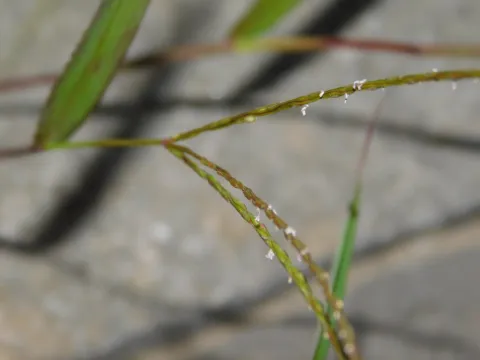
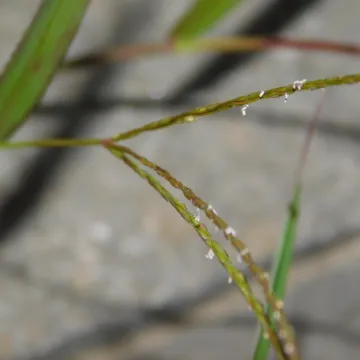
Botanically, the plant is characterized by its decumbent or spreading stems that frequently root at the nodes when touching moist ground. The leaves are typically linear and flat, providing a robust surface for photosynthesis. The inflorescence consists of several racemes arranged in a digitated fashion, which is a hallmark feature of the Digitaria genus.
In terms of climatic and soil requirements, Digitaria radicosa thrives in temperatures common to the tropics. It is not strictly demanding regarding soil fertility but performs best in well-drained, sandy loams. Good light exposure is essential for its vegetative growth and subsequent seed production, making it a competitive species in open crop fields.
Regarding its utility, while it can provide biomass for grazing animals in unimproved pastures, it is primarily managed as a troublesome weed in commercial crop production. To maintain optimal field conditions, growers focus on preventing its establishment through mechanical weeding and the implementation of crop rotation strategies that suppress its growth cycle.
Common issues affecting this species include susceptibility to fungal pathogens, such as rusts and smuts, which can impact the health of the plant during periods of high humidity. While not heavily targeted by specialized pests, like many grasses, it can act as a secondary host for various insects that transmit viruses to primary crops.
Photo gallery