Diplotaxis siifolia
Diplotaxis siifolia
Description
Diplotaxis siifolia is a herbaceous plant species belonging to the Brassicaceae family. Often overshadowed by its relative, arugula (Eruca sativa), this species represents a resilient leafy green that has been utilized in specific arid and semi-arid environments for its culinary properties and adaptability to harsh climates.
The plant originates primarily from regions in North Africa, such as Libya and Egypt. Its natural habitat is characterized by sandy and stony soils where water availability is often scarce. Throughout its evolution, Diplotaxis siifolia has developed drought-tolerance mechanisms, allowing it to complete its lifecycle in environments where many other horticultural crops would fail.
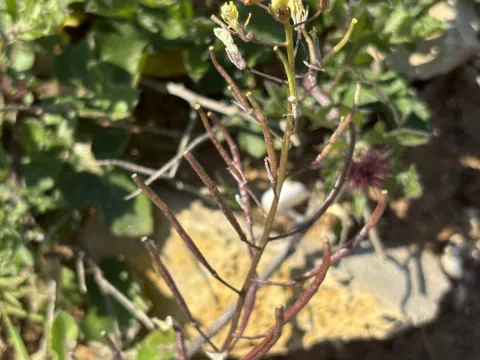
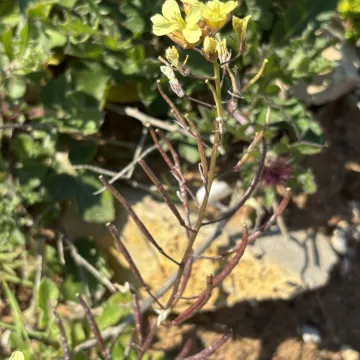
From a botanical standpoint, it is a fast-growing annual or biennial herb. It typically develops a basal rosette of deeply lobed or toothed leaves, which serve as the edible portion of the plant. The flowers are small, cruciferous, and yellow, eventually developing into siliquae (pods) that house numerous tiny seeds capable of dormant survival during dry spells.
Regarding cultivation, the plant thrives in well-drained, porous soils with a preference for sunny exposure. It is highly sensitive to soil compaction and waterlogging, which can cause severe physiological stress. Effective agrotechnology for this crop includes moderate irrigation cycles that simulate intermittent rainfall, which helps maintain the characteristic sharp, peppery flavor profile of the leaves.
Economically, the crop serves as a source of flavorful forage and fresh greens for local markets. However, high-quality production requires vigilant pest and disease management, as the plant shares the same susceptibility profile as other members of the mustard family:
- Crucifer flea beetles (Phyllotreta spp.), which cause significant leaf perforation.
- Cabbage aphids, which cluster on the undersides of leaves and cause stunted growth.
- Fungal pathogens like Albugo candida (white rust) in high-humidity conditions.
Photo gallery