Spreading wood fern
Dryopteris expansa
Description
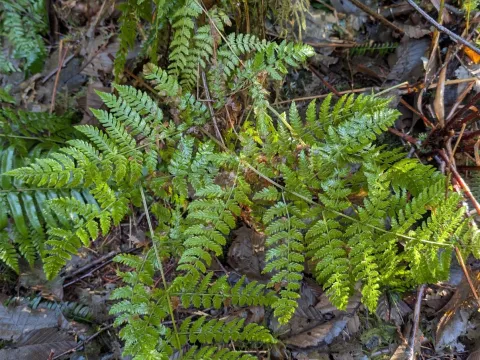
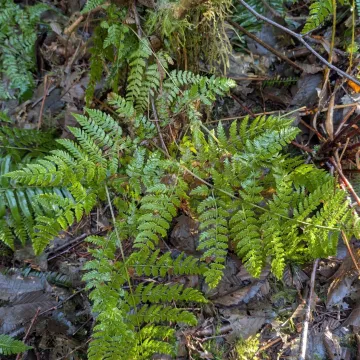
The spreading wood fern (Dryopteris expansa) is a perennial fern species belonging to the family Dryopteridaceae. It is native to temperate regions across the Northern Hemisphere, where it thrives in moist, shaded woodland habitats, rocky outcrops, and along mountain streams.
This fern is characterized by its rhizomatous growth pattern, featuring large, tripinnate fronds that form a lush, spreading crown. The fronds are typically a bright shade of green, with stipes covered in distinctive brown scales. It grows well in cooler climates, adapting to various altitudes ranging from coastal forests to alpine environments.
For successful cultivation, the spreading wood fern requires conditions that mimic its natural woodland environment. It prefers high atmospheric humidity and consistently moist, well-draining soil. It is an ideal candidate for woodland gardens where it can be shielded from harsh sunlight and drying winds.
Soil management is critical for this crop. It thrives in acidic to neutral, organic-rich soil that mimics leaf mold. When planting, it is recommended to amend the soil with peat, composted bark, or leaf litter to maintain appropriate moisture retention and aeration, ensuring the roots remain cool and protected.
In terms of usage, the spreading wood fern is primarily grown as an ornamental plant in landscaping. It is highly valued for its elegant, lacy texture and is commonly used in fern borders, shade gardens, and wild-style landscaping. While generally robust, it should be monitored for common fern pests such as slugs or scale insects, and proper irrigation is key to preventing fungal frond blight.
- Requires partial to full shade
- High tolerance for acidic soils
- Thrives in high humidity environments
- Excellent ground cover for shady areas
Photo gallery