Fragrant wood fern
Dryopteris fragrans
Description
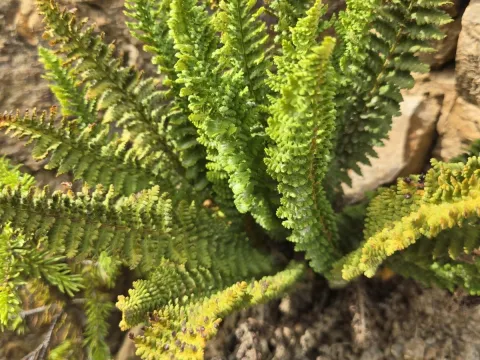
Fragrant wood fern (Dryopteris fragrans) is a perennial herbaceous plant from the Dryopteridaceae family. Unlike traditional agricultural crops, it is a specialized plant harvested primarily for its unique medicinal properties and aromatic oils. Its name reflects its distinct scent, derived from the glandular scales covering its foliage.
The native distribution of this species spans the boreal and temperate zones of the Northern Hemisphere, including Russia, Japan, and parts of North America. It is typically found in rugged, rocky environments such as cliff crevices and scree slopes. This adaptation to extreme environments makes it a hardy species capable of surviving in harsh, nutrient-poor conditions.
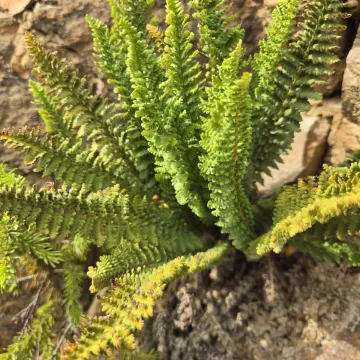
Botanically, it is defined by compact, evergreen fronds with thick, leathery textures. The plant features golden-brown glandular scales that are heavily concentrated on the stipes and rachis. Its root system is relatively shallow but highly efficient at anchoring into rocky fissures. Unlike many other ferns, it thrives in environments that receive significant sunlight, provided there is adequate drainage.
Cultivation requirements for Dryopteris fragrans are strict regarding moisture management. The soil must be exceptionally well-draining; rock gardens or coarse gravel substrates are ideal. Overwatering is the most common cause of crop failure, as it promotes root rot. The plant prefers slightly alkaline to neutral soil pH and does not require heavy fertilization, as it is naturally adapted to mineral-rich but organic-poor substrates.
The primary economic use is in the pharmaceutical industry due to the presence of potent anthelmintic compounds. Additionally, it is prized in horticulture for its fragrance and winter-hardiness. While relatively resistant to pests due to its volatile oil content, growers must monitor for fungal issues that arise from improper ventilation or excessive humidity. Propagation is best achieved through division rather than spores for consistent results.
Photo gallery