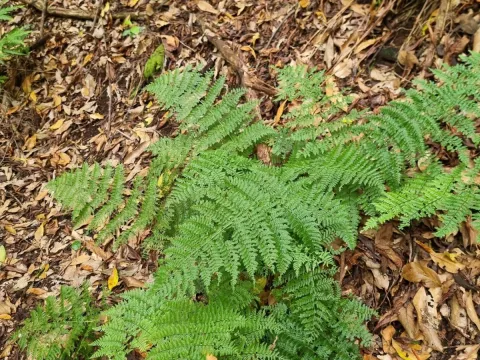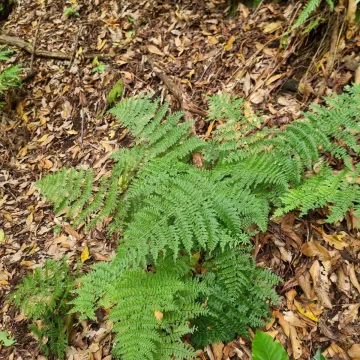
Madeiran wood fern
Dryopteris maderensis
Description
The Madeiran wood fern (Dryopteris maderensis) is a perennial spore-bearing plant belonging to the Dryopteridaceae family. Unlike traditional agricultural crops, this fern is highly valued as an ornamental species for shaded gardens, greenhouses, and conservatories, characterized by its unique foliage structure and adaptation to specific growing environments.
The plant is native to the island of Madeira and parts of Macaronesia, where it naturally occurs within humid forest ecosystems. Its original range is confined to regions with a mild oceanic climate, which makes the plant sensitive to extreme temperature fluctuations and low atmospheric humidity when introduced into different geographic areas.
Botanically, this crop is defined by a robust rhizome and elegant bipinnate or tripinnate fronds that exhibit a distinct, deep green coloration. The plant develops a dense basal rosette, maintaining its aesthetic appeal throughout the entire growing season. The fronds are noted for their firm texture and resistance to physical damage.
For successful cultivation of the Madeiran wood fern, it is essential to provide conditions that replicate its natural habitat: partial shade or filtered light and high humidity levels. The soil must be well-drained, rich in organic matter, and slightly acidic in pH. In professional cultivation, mulching the root zone with organic matter is recommended to ensure consistent moisture levels.
- Regular moderate watering without waterlogging.
- Protection from direct intense sunlight.
- Application of liquid fertilizers designed for ferns during the active growth phase.
- Regular inspection for aphids and scale insects.
The primary commercial use of Dryopteris maderensis is in interior landscaping and ornamental gardening. In professional nurseries, it is propagated primarily through rhizome division or spore cultivation. With proper management, the plant demonstrates good resistance to common fungal pathogens, though preventative care against root rot is necessary if drainage management is suboptimal.
Photo gallery