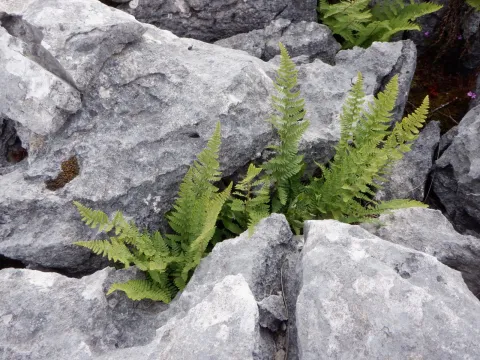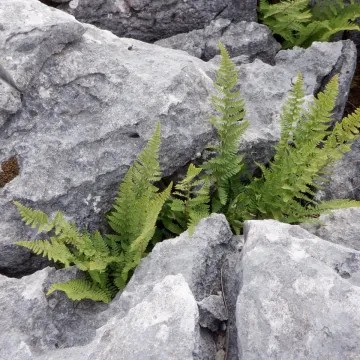
Mountain buckler fern
Dryopteris submontana
Description
The mountain buckler fern (Dryopteris submontana) is a perennial herbaceous plant belonging to the Dryopteridaceae family. Within professional horticulture, this species is highly regarded for its structural elegance and its ability to thrive in specialized ecological niches, making it a sought-after choice for rock gardens and sophisticated landscape designs.
Native to the mountainous regions of Central and Southern Europe, this fern is naturally adapted to growing in limestone crevices and scree slopes. Its cultivation range requires environments that mimic its high-altitude origins, focusing on areas with excellent drainage and a temperate climate that avoids extreme heat and excessive humidity.
Botanically, the plant forms a symmetrical, shuttlecock-like rosette of rigid, twice or thrice-pinnate fronds. A defining characteristic of Dryopteris submontana is its preference for slightly alkaline, calcium-rich soils, which is an important consideration for growers looking to maintain its health and vibrant coloration throughout the season.
In terms of agricultural management, success depends on providing a well-drained substrate and partial shade. Unlike other ferns that thrive in purely acidic peat, this species requires a soil mix that allows for air circulation around the rhizomes. Regular, but not excessive, moisture is critical during the active spring growth phase to prevent stress.
The primary utility of the mountain buckler fern is in ornamental landscaping. While generally hardy, the plant can be susceptible to fungal leaf spots and nematode infestations if air circulation is insufficient or if the growing medium becomes waterlogged. Maintaining spacing and practicing clean gardening habits are essential strategies for disease management.
Photo gallery