Echeveria elegans hybrid
Echeveria elegans Rose x Echeveria gibbiflora DC.
Description
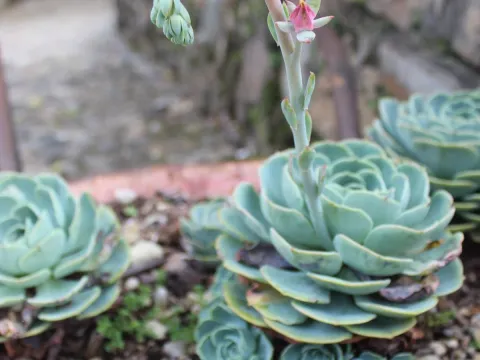
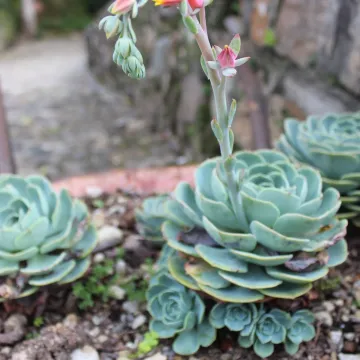
Echeveria elegans hybrid (Echeveria elegans x Echeveria gibbiflora) is a decorative succulent species belonging to the Crassulaceae family. This hybrid combines the distinct rosette morphology of Echeveria elegans with the vigorous growth and foliage size of Echeveria gibbiflora, making it a staple in ornamental horticulture.
The original species are native to the high-altitude, arid regions of Mexico. Today, the hybrid is widely cultivated across various climatic zones as an indoor pot plant or a specimen for specialized succulent nurseries, thriving in well-controlled environments that mimic its natural habitat.
Botanically, the plant forms a fleshy, geometric rosette covered in a glaucous wax layer, which acts as a protective barrier against environmental stress. The inflorescences emerge on long stems, producing delicate bell-shaped flowers, which are characteristic of this genus, in shades ranging from soft yellow to deep pink.
The agrotechnology for this plant demands an emphasis on soil porosity and drainage. It requires full sun or high-intensity LED lighting to maintain its compact shape, avoiding the etiolation that occurs in low-light conditions. During the growing season, watering must be thorough but infrequent, ensuring the substrate dries completely between applications.
Basic cultivation requirements include:
- High light levels for 10–12 hours daily.
- Mineral-heavy, fast-draining substrate mix.
- Temperature maintenance between 15°C and 25°C.
- Avoidance of overhead watering to prevent crown rot.
This crop is primarily used in commercial floriculture and landscape design for xeriscaping. Common pests include mealybugs and spider mites, which can be controlled through integrated pest management strategies. Diseases, primarily fungal rots (Fusarium, Phytophthora), are largely managed by strictly regulating humidity and soil moisture levels.
Photo gallery