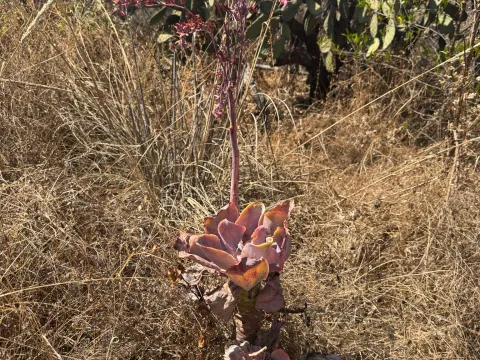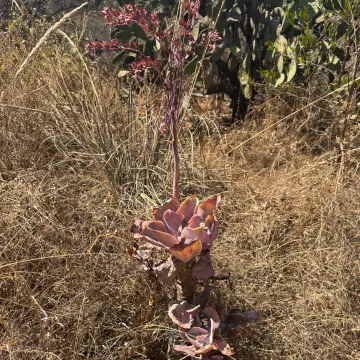
Echeveria gibbiflora
Echeveria gibbiflora DC.
Description
Echeveria gibbiflora (Echeveria gibbiflora DC.) is a significant succulent species belonging to the Crassulaceae family. Unlike smaller relatives, this species is noted for its substantial size and robust growth habit. Its thick, fleshy leaves often form large, dense rosettes that can grow quite tall over time, providing a bold architectural aesthetic to any plant collection.
Originating from the rocky and arid regions of Mexico, this plant is well-adapted to high sunlight intensity and limited water availability. Its evolutionary history has made it a resilient crop for specialized nursery production and indoor gardening. In commercial horticulture, it is cultivated primarily in controlled environments to maintain the health of its delicate waxy leaves.
The botanical profile of Echeveria gibbiflora includes distinctive spatula-shaped leaves that can vary in color from deep green to rich purple depending on exposure to light. The plant produces tall, branching inflorescences featuring numerous coral-pink, bell-shaped flowers. Its vegetative propagation is primarily achieved through leaf cuttings or the natural division of offshoots from the base.
The cultivation requirements for this species focus on excellent drainage and light management. A substrate rich in porous materials such as pumice, coarse sand, and perlite is essential to prevent water accumulation near the root crown. Proper light exposure is critical; insufficient light leads to etiolation, where the plant loses its natural compact shape and becomes structurally weak.
Management of the crop requires vigilant monitoring for diseases such as fungal root rots, typically induced by overwatering. Pests like mealybugs and spider mites are the most common adversaries, requiring routine inspection and integrated pest management strategies. The primary use of this culture is for ornamental purposes, ranging from luxury indoor decorative displays to landscape designs in Mediterranean-like climates.
- Prioritize well-draining soil mixtures.
- Ensure at least 6 hours of bright light daily.
- Avoid overhead watering of the leaf rosette.
- Monitor for mealybug infestations regularly.
Photo gallery