Peacock's Echeveria
Echeveria peacockii Croucher ex T. Moore & Mast.
Description
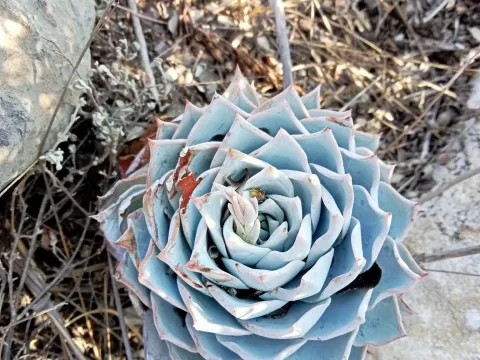
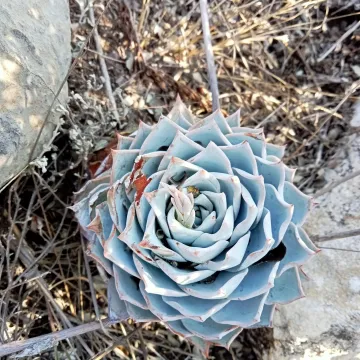
Peacock's Echeveria is a stunning perennial succulent belonging to the Crassulaceae family. This species is widely recognized for its tight, rosette-forming structure and fleshy, spoon-shaped leaves that are coated in a distinctive powdery, blue-white wax, giving them an elegant, matte finish.
Native to the rugged, high-altitude regions of Mexico, this plant has evolved to survive in nutrient-poor, rocky substrates. Its natural habitat dictates its primary agricultural requirements, favoring excellent drainage and high exposure to sunlight to maintain its compact, healthy form.
Botanically, the species is distinguished by its slow, steady growth rate and its ability to thrive with minimal water. The edges of the leaves may flush with a vibrant pink or reddish hue when exposed to intense solar radiation, providing a significant aesthetic appeal in decorative gardening.
Cultivation success depends on mimicking its native environment. The soil medium must be highly porous, typically composed of perlite, pumice, and potting soil. Proper irrigation follows the "soak and dry" method, where the soil is allowed to dry out completely before the next watering to prevent root rot.
- Exposure to bright, direct or slightly filtered sunlight.
- Well-draining growing medium for desert plants.
- Moderate temperature range between 18°C and 25°C.
- Cooler dormant phase in winter to stimulate flowering.
Common health issues include fungal root rot caused by overwatering or poor ventilation. The most frequent pests associated with this crop are mealybugs, which tend to congregate in the protected areas of the leaf rosettes, requiring manual removal or systemic treatments for effective management.
Photo gallery