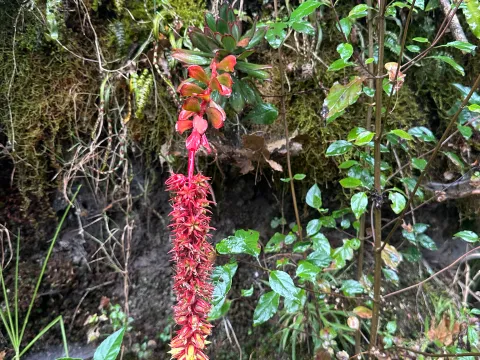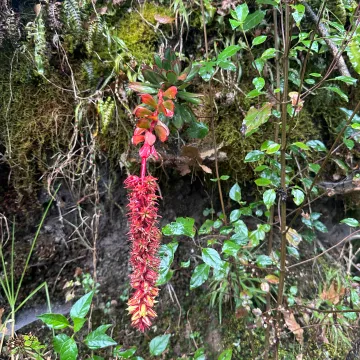
Echeveria rosea
Echeveria rosea Lindl.
Description
Echeveria rosea (Echeveria rosea Lindl.) is a succulent perennial plant belonging to the Crassulaceae family. Known for its distinct rosette structure, this species is widely cultivated in the commercial ornamental plant industry for its aesthetic appeal and structural resilience.
Originating from the mountainous regions of Mexico and Central America, the plant is adapted to rocky, well-drained environments with high levels of solar radiation. As an agricultural product, it is primarily grown in controlled greenhouse conditions, where environmental factors can be precisely managed to ensure optimal growth and color development.
Botanically, Echeveria rosea is characterized by fleshy, succulent leaves arranged in tight, aesthetic rosettes. When exposed to sufficient sunlight, the foliage often exhibits a subtle pink hue, which is a distinguishing feature of this specific taxon. Its reproductive cycle involves the development of elongated stalks bearing small, attractive flowers, which adds to its commercial value.
The agronomic requirements for this crop focus on imitating its native environment. It necessitates a highly porous, well-draining substrate to prevent moisture accumulation near the roots. Lighting must be intense but diffused, as direct harsh sunlight can occasionally scorch the leaves, while insufficient light leads to etiolation and loss of the plant's natural form.
Maintaining plant health requires strict monitoring for common succulent pests and fungal pathogens, typically resulting from improper irrigation strategies:
- Root rot caused by stagnant water in the root zone.
- Mealybug infestations in the center of the leaf rosettes.
- Spider mite outbreaks in low-humidity greenhouse environments.
- Fungal spots resulting from poor airflow and excessive leaf wetness.
Photo gallery