Walter's millet
Echinochloa walteri
Description
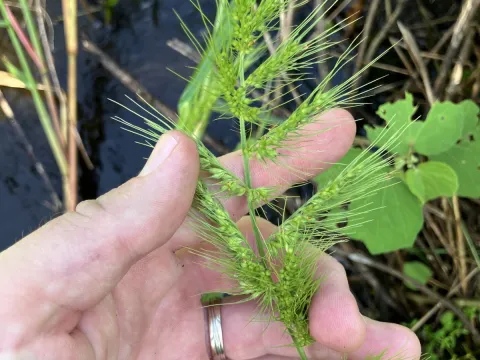
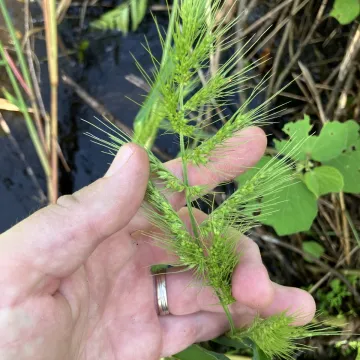
Walter's millet (Echinochloa walteri) is an annual grass species belonging to the Poaceae family. This plant is well-regarded for its adaptability to wetland environments and its potential as a specialized forage or grain crop in areas where traditional cereals may struggle due to soil saturation.
Originating from North America, this species is naturally found in marshes, floodplains, and damp margins of water bodies. Its global distribution has expanded as it proved highly effective in colonizing moist soils. It is a robust plant that thrives in warm climates, showing aggressive growth patterns during the peak summer months when moisture is abundant.
Botanically, Walter's millet is distinguished by its height and broad, coarse leaves. The inflorescence is a panicle that often displays reddish or purple hues, providing a distinct visual characteristic. The plant produces a high volume of small, nutritious seeds that are highly valued by wildlife and can be harvested for specific agricultural applications.
The agronomic requirements for this crop focus primarily on soil moisture. It is a moisture-loving plant that requires little maintenance once established in suitable conditions. Sunlight is a secondary critical factor; it performs best in full sun, avoiding competition from shaded areas. Proper seeding density is essential to allow the plant to achieve its maximum biomass potential per hectare.
- Production of nutrient-dense forage and silage for livestock.
- Restoration of wetlands and soil stabilization projects.
- Use as a high-energy seed supplement in bird feed and specialized livestock diets.
- Effective cover crop for saturated soil environments.
Disease management is a key aspect of cultivating Walter's millet. Rusts and smuts are the most common pathogens, particularly when plants are grown in overcrowded conditions with poor air circulation. Integrated pest management strategies, such as crop rotation and balanced nutrient application, are recommended to maintain healthy stands and maximize seed or forage yield.
Photo gallery