Hedgehog grass
Echinopogon ovatus
Description
Hedgehog grass (Echinopogon ovatus) is a perennial grass species belonging to the family Poaceae. As a forage crop, it is recognized for its ability to persist in various grassland environments, providing essential ground cover and nutritional value for livestock grazing systems.
Native to Australia and New Zealand, this grass has successfully spread across various temperate regions. Its distribution is largely influenced by its adaptability to different soil types and its capacity to thrive in open, sunny habitats, as well as along the margins of forest clearings. This resilience makes it a subject of interest for sustainable grassland management.
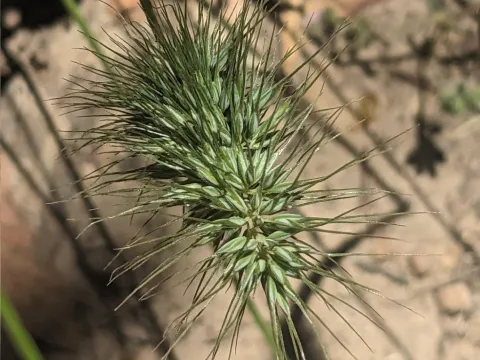
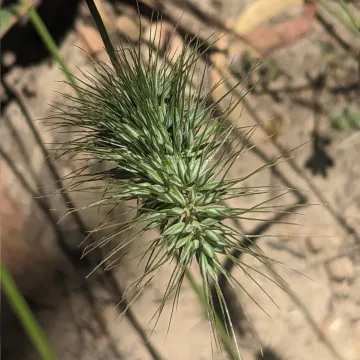
Botanically, Echinopogon ovatus is characterized by its tufted, erect growth habit, typically reaching heights of 20 to 80 cm. The leaves are generally flat and possess a rough texture. The most distinctive feature is its inflorescence—a dense, egg-shaped, spike-like panicle. The presence of stiff, awn-like structures on the spikelets gives the plant its common name and a distinct prickly appearance during maturity.
In terms of agricultural requirements, hedgehog grass thrives in well-drained soils and prefers moderate rainfall. While it can withstand periods of dry weather, it performs best in soils with adequate nutrient levels. Proper pasture management, including rotational grazing, is essential to maintain the health of the stand and prevent the degradation of the pasture through overgrazing, which can reduce the plant's long-term vigor.
The primary economic use of this species is as fodder for grazing livestock, contributing to the overall productivity of natural pastures. However, maintaining high yields requires attention to both biological and environmental challenges:
- Susceptibility to rust fungi, particularly during periods of high humidity and stagnant air.
- Competition from invasive weeds, which can displace the grass if the soil becomes compacted.
- The need for controlled grazing cycles to ensure the plant remains in a vegetative state and maintains high protein levels for cattle and sheep.
Photo gallery