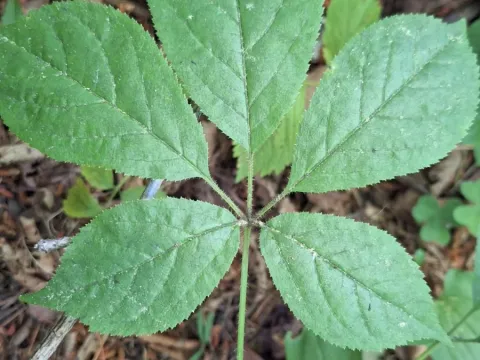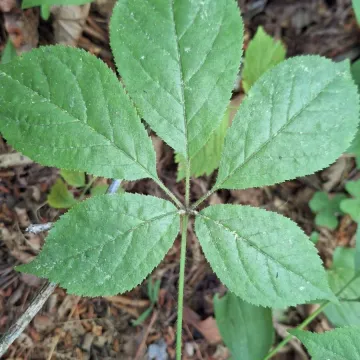
Siberian ginseng
Eleutherococcus senticosus (Rupr. et Maxim.) Maxim.
Description
Siberian ginseng (Eleutherococcus senticosus) is a valuable perennial medicinal crop belonging to the Araliaceae family. Widely recognized in pharmacology for its potent adaptogenic properties, it is commonly cultivated as a specialized agricultural product. This deciduous shrub is highly valued for its roots, which are used to produce health-promoting extracts.
The natural distribution area covers the Russian Far East, northeastern China, the Korean Peninsula, and Japan. The plant typically thrives in mixed coniferous and broad-leaved forests, favoring slopes and forest clearings. Its adaptation to temperate climates allows it to be successfully cultivated in various regions with consistent soil moisture and moderate sunlight.
Botanically, the plant is a spreading shrub that can reach heights of up to 2.5 meters, characterized by stems densely covered with small prickles. The root system is extensive and horizontal, which is critical for harvesting. The leaves are palmately compound, and the plant produces clusters of small black berries upon maturation, which usually occurs in the late summer or autumn.
Successful cultivation requires loose, well-drained, and nutrient-rich soils. While the plant is winter-hardy, it requires careful management during the initial growth stages, including protection from direct scorching sun and excessive water logging. Propagation is typically achieved through seeds, which require stratification, or through vegetative cuttings taken from established rootstock.
The primary economic and agricultural uses of Siberian ginseng include:
- Extraction of active compounds (eleutherosides) for the pharmaceutical industry.
- Development of dietary supplements aimed at enhancing immune function and physical endurance.
- Use in cosmetic formulations for skin health and revitalization.
The crop is susceptible to certain pathogens, specifically root rot diseases that occur in poorly drained soil, and fungal spots that affect the foliage. Pest management involves monitoring for common issues like aphids and spider mites. Maintaining good agricultural hygiene, proper spacing between plants, and timely application of environmentally safe fungicides are essential for ensuring a high-quality harvest.
Photo gallery