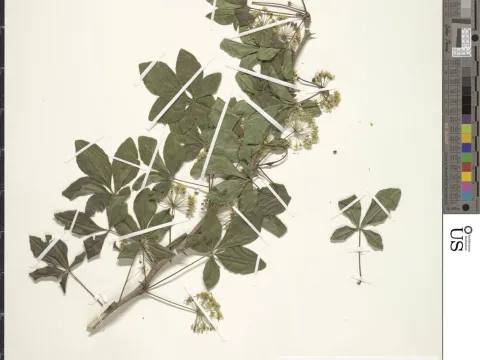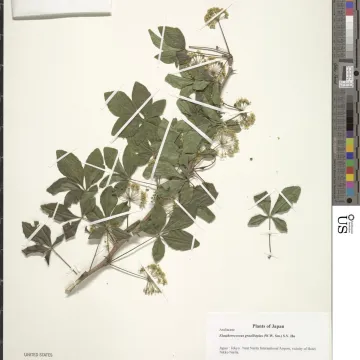
Eleutherococcus gracilistylus
Eleutherococcus gracilistylus (W. W. Sm.) S. Y. Hu
Description
Eleutherococcus gracilistylus is a perennial deciduous shrub belonging to the Araliaceae family. Known for its medicinal properties, this species is a valuable botanical resource used extensively in traditional East Asian medicine, particularly for its adaptogenic effects on the human body.
The plant is native to East Asia, primarily inhabiting forested regions in China, Korea, and Japan. It thrives in temperate environments with adequate moisture levels. In cultivation, it performs best in habitats that mimic its natural mountainous or woodland settings, characterized by mild winters and moderate summer temperatures.
Botanically, the species is recognized by its woody stems, often armed with slender prickles, and palmate leaves. It produces small, cluster-like inflorescences that develop into black drupes. The root system is the most significant part for commercial harvesting, as it contains the high concentration of bioactive compounds known as eleutherosides.
Successful farming requires well-drained, nutrient-rich soil with a slightly acidic to neutral pH. Agricultural management involves providing partial shade, especially during the initial stages of growth, and ensuring consistent moisture levels without waterlogging. Regular mulching is recommended to prevent soil compaction and to maintain stable root temperature.
Commercially, the crop is cultivated for the pharmaceutical industry to support the production of immune-boosting supplements. Managing the crop requires vigilance against common pests like aphids and diseases such as root rot. Proper plantation maintenance includes careful pruning and the use of organic fertilization methods to maximize root density and quality.
- Soil aeration through regular cultivation.
- Implementation of irrigation systems for dry climates.
- Periodic inspections for mite infestations.
- Harvesting roots during the dormant autumn season.
Photo gallery