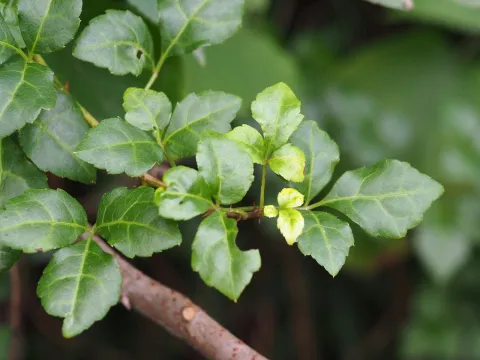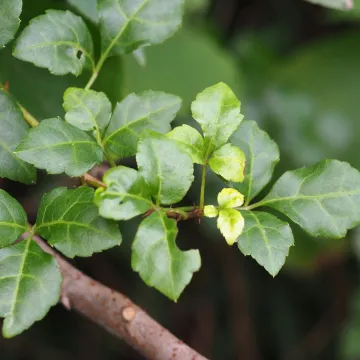
Eleutherococcus trifoliatus
Eleutherococcus trifoliatus (L.) S. Y. Hu
Description
Eleutherococcus trifoliatus is a perennial woody climber belonging to the Araliaceae family. It is a distinctive member of the genus, known for its trifoliate leaves and vigorous climbing habit, which differentiates it from the more widely known bush-type relatives such as Eleutherococcus senticosus.
The native distribution of this species spans across East and Southeast Asia, including regions in China, Japan, and Vietnam. It naturally inhabits forest margins and scrublands, thriving in environments that provide dappled sunlight and protection from harsh weather conditions. Its successful cultivation depends on mimicking these natural microclimatic conditions.
Botanically, the plant features stems armed with thorns and complex, leathery leaves that form a dense canopy. The plant produces small, inconspicuous flowers arranged in umbels, which eventually develop into dark-colored drupes. Its root system is extensive and fibrous, adapted for nutrient uptake in woodland soils.
For optimal production, the plant requires well-drained, fertile soil with a slightly acidic to neutral pH. Agricultural management involves regular irrigation, especially during the establishment phase, and the provision of structural supports such as trellises. Propagation is typically achieved through stem cuttings or layering, as seed germination can be erratic and slow in field conditions.
The economic and agricultural utility of this plant is primarily focused on the pharmaceutical sector. Key applications include:
- Development of adaptogenic medicinal products.
- Extraction of bioactive compounds for the supplement industry.
- Use in traditional herbal medicine for metabolic support.
Common agricultural challenges include susceptibility to root rot in poorly drained soils and leaf-spotting fungi. Pests such as aphids and spider mites may infest the foliage during warm, dry spells. Integrated pest management strategies, focusing on biological controls and proper site selection, are recommended to maintain high-quality herbal yields throughout the growing season.
Photo gallery